This post belongs to a wider body of work that is being released in stages. It can be read on its own, or as part of the whole. The Prologue offers a natural point of entry for sequential reading.
This book has not been about addiction alone.
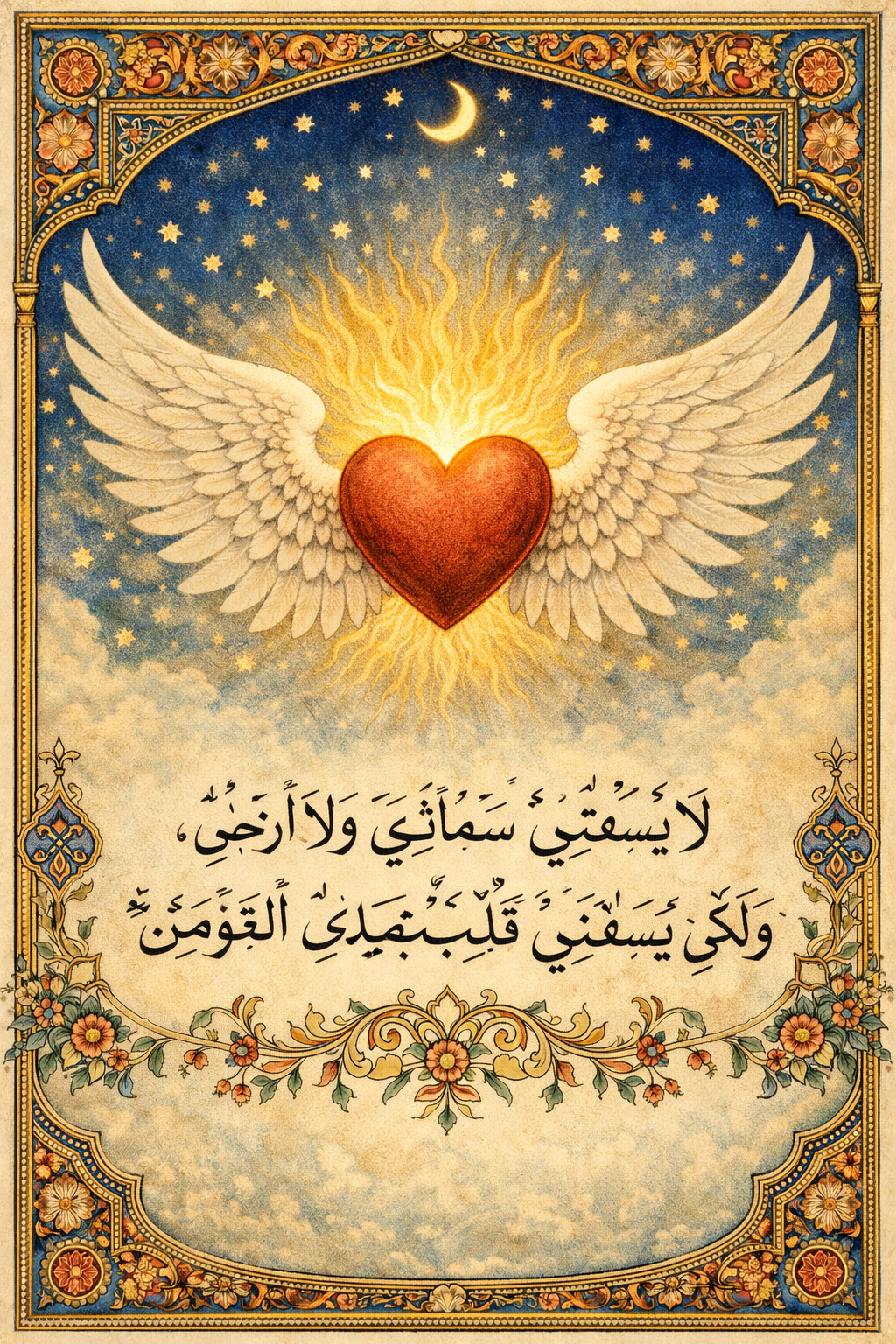
*A well-known ḥadīth qudsī, preserved in the Sufi tradition, expresses the mystery succinctly:
“Neither My heavens nor My earth contain Me, but the heart of My believing servant contains Me.”
This is not a statement of location, but of capacity — a language of presence, not possession.*
Addiction has been its doorway.
Throughout these chapters, addiction has been treated neither as moral failure nor as isolated pathology, but as a bellwether disease — an early warning signal of a deeper disorder unfolding within individuals, systems, and cultures.
Where addiction appears, something essential has been mis-governed. Where it persists, something essential has been silenced. Where it breaks through, something essential is attempting to be restored.
This is why addiction refuses to be resolved by technique alone. It is not a problem that yields to willpower, management, or substitution. It is a signal — often loud and destructive — that the human being has been cut off from the ground of their own Being.
The Holy Con names this cut.
The “con” is not deception in the everyday sense. It is the great misalignment in which the middle “I am” assumes the authority of the Big “I AM,” and subordinate spheres — money, identity, ideology, role, power, even religion — begin to claim keys they cannot hold.
This is the unholy con that has governed much of Mankind. It explains why systems multiply while meaning thins, why control increases while coherence collapses, and why both individuals and institutions oscillate between inflation and despair.
Addiction is the place where this con fails.
In the addicted person, compensations exhaust themselves. Executive function collapses. Behaviour loses flow. What remains is raw pressure — ascending and descending — demanding a resolution that management cannot provide.
This is why addiction so often coexists with insight, crisis, despair, longing, and unexpected spiritual awakening. The organism can no longer pretend. The false centre breaks.
The Holy Con names the reversal of this collapse.
It is the moment when misalignment is revealed not as personal failure, but as structural error. When conscience is born, educated, and stabilised. When the human being ceases to impersonate Being and instead learns to cooperate with it.
This cooperation does not remove difficulty. It restores order.
It is at this point that Diction Resolution Therapy (DRT) can be named clearly.
DRT is not a Twelve Step handbook, nor is it a replacement for the Twelve Step Programme. It is an orientation approach to behaviour change that has emerged through years of clinical practice in residential rehabilitation, prison-based recovery work, and ongoing therapeutic settings.
DRT concerns itself with the restoration of a three-part human template — commonly articulated in recovery dynamics as Spiritual, Mental, and Physical. When one part of this template is lost or collapsed into another, fear and resentment become dominant, and behaviour is recruited to manage pressures it cannot hold.
DRT works by attending to the interfaces between realms: the interface of the Invisible and the Mental, and the interface of the Mental and the Visible. It neither collapses these realms into one another nor privileges one at the expense of the rest.
The Visible Realm is further understood through universal instincts — Security, Social, and Sex — which belong to all Mankind and to most animal life. These instincts are not pathological. They are vehicles. When mis-governed, they dominate behaviour. When rightly oriented, they serve life.
Within this framework, addiction is understood not simply as substance use or compulsion, but as a breakdown in orientation — a state in which behaviour attempts to compensate for a collapse in the DICTION chamber, where BE, HAV(E), I, and OUR are no longer connected.
DRT therefore speaks of stuck-addiction and broken-addiction not as diagnoses, but as descriptive states within a wider aetiology of pressure, meaning, and disconnection.
The Twelve Step Programme appears throughout this book not as ideology, but as one of the most accurate cultural artefacts ever produced for navigating this territory. It does not explain the mystery. It builds a vessel capable of carrying it.
The Steps do not cause awakening. They create the conditions under which awakening can be survived.
DRT does not instrumentalise the Steps, nor does it subsume them. It stands alongside them as a conversational partner — an orientation that can interface with multiple Fellowships, counselling models, and evidence-based practices where openness to integration exists.
This book therefore marks the public emergence of DRT — not as a finished system, but as a living orientation. Further books will be required to expand these insights, grounded in the accumulated hours of clinical practice and lived recovery that cannot be compressed into a single volume.
The deeper purpose of this book has been singular:
to name the con that governs Mankind, and to reveal the holiness required to undo it.
If addiction is the bellwether disease of our time, then it is also a teacher. It asks, again and again, a question that systems prefer to avoid: What governs a human life?
This book does not answer that question for the reader. It restores the conditions in which the question can be faced.
The rest belongs to life.
 the HU man healing