This post belongs to a wider body of work that is being released in stages. It can be read on its own, or as part of the whole. The Prologue offers a natural point of entry for sequential reading.
“The wound is the place where the Light enters you.” — Rumi
We live in a time when many people believe institutions are a con. But the word con never meant deception. Its root is the Latin cum — meaning with. And everything depends on this question: With what — or with whom — are we aligned?
This question opens the entire Way.
There is a con with a small c and a Con with a capital C. There is being with in a lesser way and being With in a greater way. There is Mankind and there is Humankind.
Mankind is the left-hand place — the state of being with the wrong thing: with the stuck behaviour, with the collapsing institution, with the ego attempting to self-govern what it cannot heal, with repetition rather than revelation, with survival rather than surrender.
Humankind is the right-hand place — the state of being with the right thing: with the Greater Power, with the breath of the Real, with the paradox that restores sanity, with Step Eleven consciousness, with the Creative Intelligence that the Twelve Steps return us to.
This is not moralism. This is alignment. This is orientation. This is the architecture of the soul. We are designed to get things wrong before we get things right, vice and virtue are in the very template of individuate wisdoms.
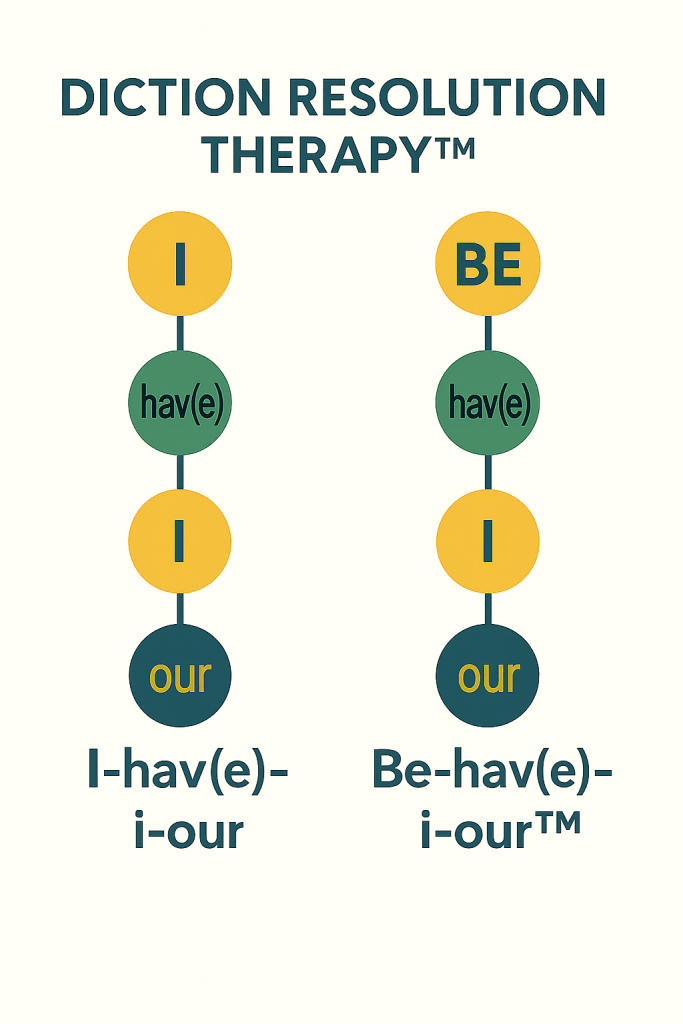
The DRT behaviour device shows this with elegant precision — a single vertical axis holding the left and right words, revealing the movement from Mankind toward Humankind.
On the left-hand side is Mankind — the small con: being with the failing pattern, with the exhausted will, with the illusion of self-sufficiency.
On the right-hand side is Humankind — the great Con: being with the Higher Power, with humility, with paradox, with the Source that makes healing possible.
These two sides are never enemies. They are connected, paired, dependent — two poles of one paradox, the paradox through which transformation enters.
Wrong leans toward right. Right redeems wrong. The brokenness becomes the place of belonging. The collapse becomes the first clarity. The wound becomes the aperture for Light.
Our institutions are collapsing because they have remained too long in the realm of Mankind — with self-reference, with egoic governance, with structures cut off from their Source.
But collapse is not annihilation. Collapse is the small con exhausting itself. Collapse is the threshold of the great Con — the return of Humankind.
Every addict knows this. Every recovery room embodies this. Every true spiritual lineage teaches this.
A person recovers not by becoming stronger, but by becoming With. Not by reinforcing the ego, but by returning to Humankind.
A culture recovers in exactly the same way.
The question is always the same: Are we living as Mankind — or awakening as Humankind? What are we With? And what must we come-With next?
This is where The Holy Con begins — with the rediscovery of withness as the axis of healing, orientation, and return.
And the Way will appear as the next stone rises beneath the foot.
This post belongs to a wider body of work that is being released in stages. It can be read on its own, or as part of the whole. The Prologue offers a natural point of entry for sequential reading.
“Energy equals mass times the speed of light squared.” — Albert Einstein
This is not metaphor. It is a working description of a closed system.
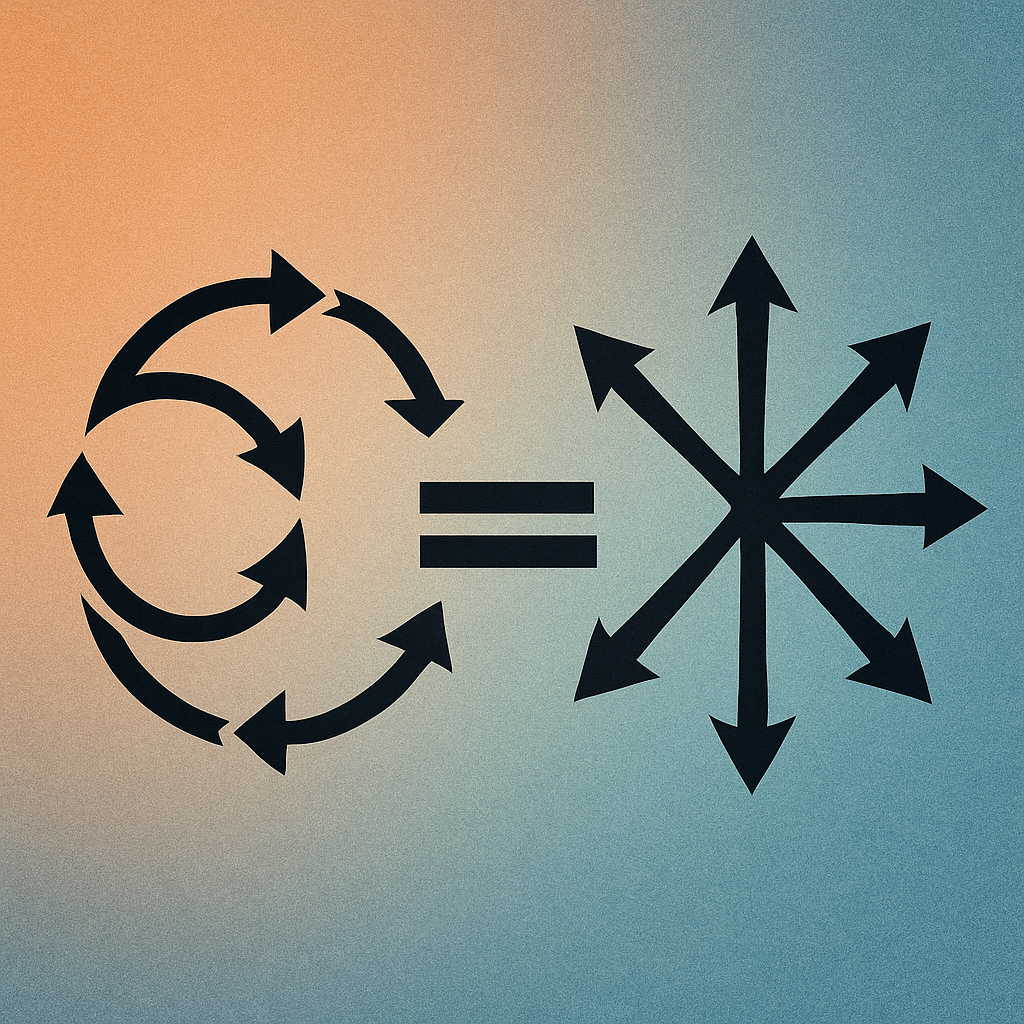
E = mc² holds because energy and matter are not rivals but expressions of one reality maintained through relationship. What makes the system viable is not either side of the equation, but what sits between them.
The equals sign.
Remove the equals sign and the system does not become freer; it becomes unstable. Energy overwhelms form, or form constrains energy until failure occurs. The problem is never energy itself or matter itself. The problem is the loss of regulation.
Human consciousness has suffered an equivalent structural failure.
For centuries, identity has been weighted almost entirely toward cognition, narrative, and effort. Conscience was reduced to belief, instruction, or compliance rather than recognised as a functional regulator within a living system. Thought became identity. The mind was treated as the whole.
The Twelve Step template corrects this error with unusual precision.
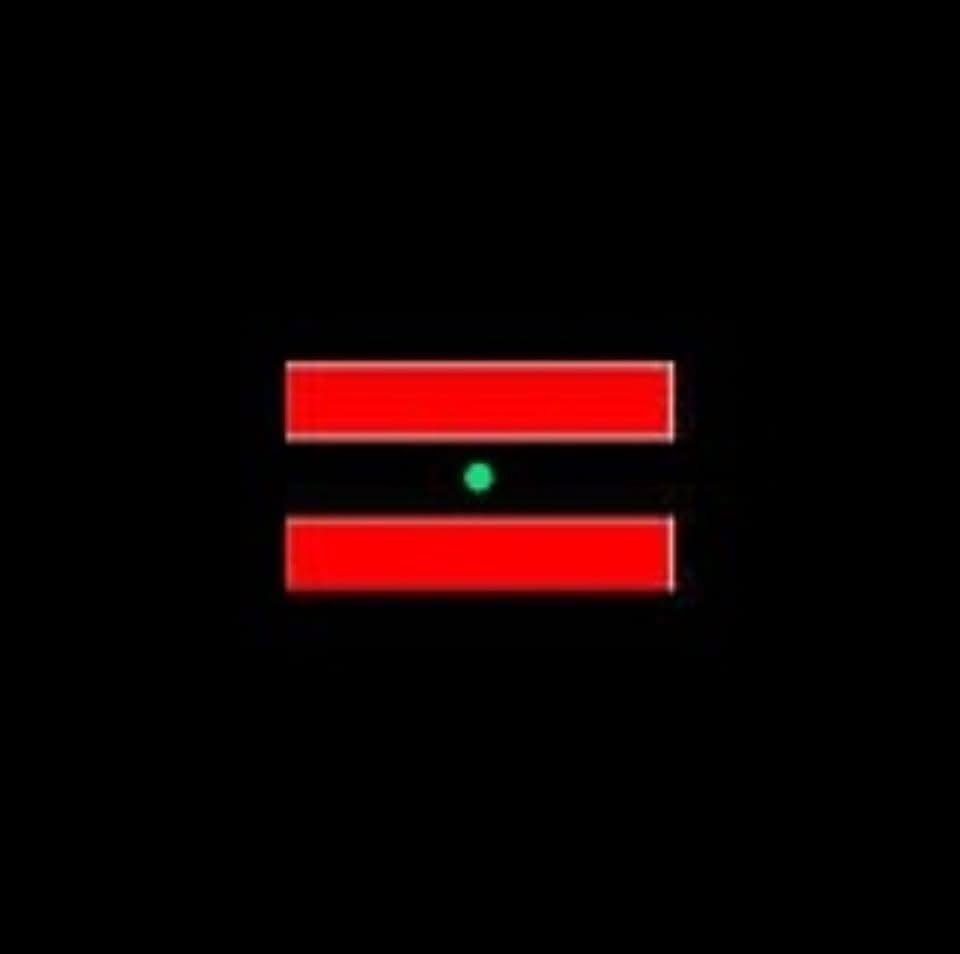
Step Three establishes the lower line of the equals sign: the embodied human being returning their will and life as they are — conditioned, conflicted, unfinished. This is not resignation; it is structural truthfulness.
Step Seven establishes the upper line: conscious alignment with the One beyond the personal system — not as belief, but as contact. Willingness replaces strain. Alignment replaces control.
Between these two lines, a third function becomes possible.
This is where Step Five must be understood accurately.
Step Five is not moral confession. It is the delivery of conscience. It is the moment awareness becomes accountable within relationship, rather than circulating privately inside the mind. Until this delivery occurs, conscience remains present only in potential — sensed but not governing.
Step Five places the central point between the lines.
This point is not judgement, diagnosis, or ideology. It is individuated conscience: the capacity to recognise alignment and misalignment in real time, from within the person, rather than imposed from outside. Clinically, this is the restoration of internal regulation through truthful disclosure.
This is the gain control. This is the regulatory function. This is the equals sign restored.
When conscience is absent, energy overwhelms form (compulsion, repetition, escalation), or form suppresses energy (numbing, rigidity, collapse). When conscience is present, the same forces move through the system without damage and generate coherence.
This chapter concerns that restoration — not the elimination of desire, but the regulation of power; not the dominance of mind, but its return to function; not separation from the body, but reintegration of mind, psyche, and organism into a single working system.
The modern world — including many professional healthcare workers — conflates emotions and feelings into one list. Yet they are not the same.
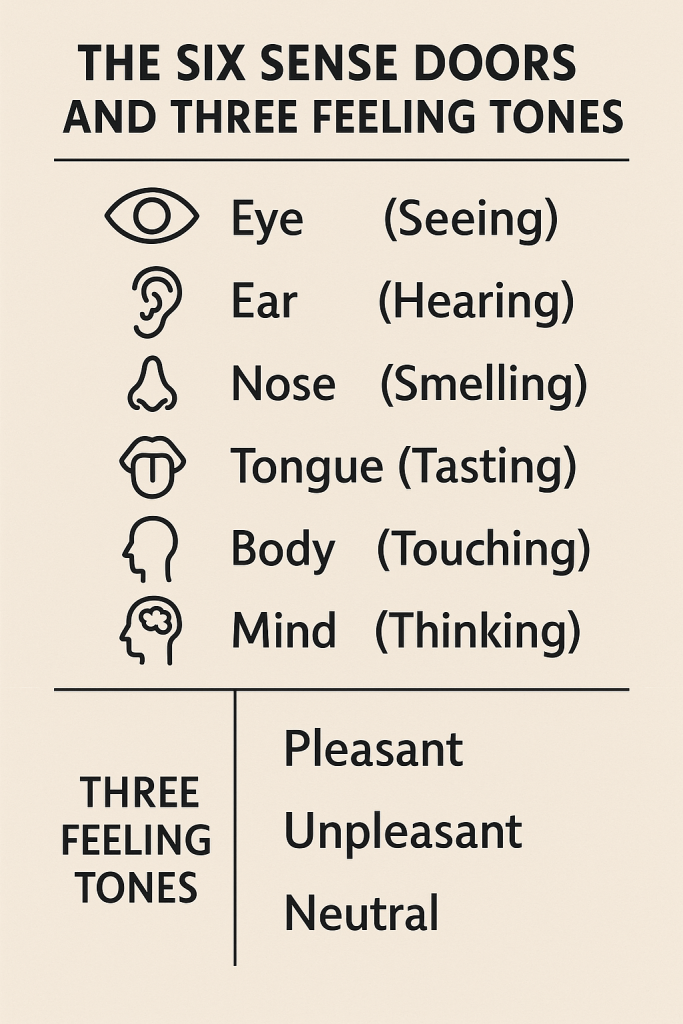
Feelings are the continuous pressure system of the psyche — ascending, descending, or neutral i.e. transcending — the inner equivalent of blood pressure.
Emotions are the barometric responses to those pressures — expressive weather systems, passing storms, momentary turbulence.
Feeling-pressure is the inner meteorology. Emotion is the barometer registering its movement.
Until conscience is delivered, these inner systems remain difficult to trust. Right and wrong are felt only dimly, borrowed from outside, or imposed as rules rather than recognised as alignment. The organism feels pressure, but does not yet know with itself what that pressure means.
All experience enters through the five physical senses and was designed to be received by the mind, which is the stomach of the psyche. The mind is not a throne, not a control centre, not the essence of being. It is the digestive organ of inner life, receiving raw impressions as the body receives food — softening, mixing, breaking down, and integrating what comes in.
In the same way, conscience is not an abstract moral faculty. It emerges when digestion is restored — when experience has been received, broken down, and integrated rather than bypassed or acted out. Conscience cannot be installed. It must be born.
This digestion is continually heated and stirred by three biological instincts:
Sex instinct — toward union, creativity, pleasure
Social instinct — toward belonging, role, recognition
These instinctual tones behave like thermal currents, shaping the texture of our inner weather.
But when the mind is lifted out of its digestive role and mistaken for the self — when it becomes a noun instead of the verb it was always meant to be — a catastrophic split begins. The mind becomes a box, a container in which a person attempts to live, separate from the organism that bears them.
Addiction arises as the organism’s desperate attempt to blow the box apart — to force a reunion between mind and psyche, and between psyche and the animal body. It is not merely escape; it is a violent attempt at reintegration.
In this sense, addiction is not the opposite of conscience but its precursor under pressure. The executive function — the capacity to bind, repeat, and devote — is alive and vital, yet ungoverned by an individuated knowing-with-self. Until conscience arrives, that binding power attaches to substitutes. The energy is not wrong. The marriage has not yet occurred.
When this split deepens, awareness detaches into a pod-like mind, floating above the living organism on a trickle charge of sensation and story. Detached awareness no longer inhabits the animal body, and so the person treats their own body in ways they would never treat a dog — with overwork, intoxication, deprivation, sedation, punishment, and neglect — not from cruelty, but from disconnection.
This disconnection is precisely what older spiritual language described as a second birth — not a conversion of opinion, but the delivery of conscience itself: the moment awareness becomes answerable and knowing becomes personal rather than theoretical.
At the heart of recovery is this revelation: the mind was never meant to be a noun. Its primary meaning is a verb: to mind — to care for, to attend to, to shepherd. This is the original function of mind in the architecture of Humankind.
In the Twelve Step Programme, this restoration occurs through a precise delivery apparatus. Steps Three, Seven, and Eleven restore contact — re-pairing the circuit so that consciousness is no longer running on a trickle charge. But contact alone is not sufficient. What follows is birth.
These insights do not arise from abstraction. They come from years of client work with cases that seemed impossibly complex — until the distinction between the two bodies became visible: the outer biological body and the inner ontological body of the psyche.
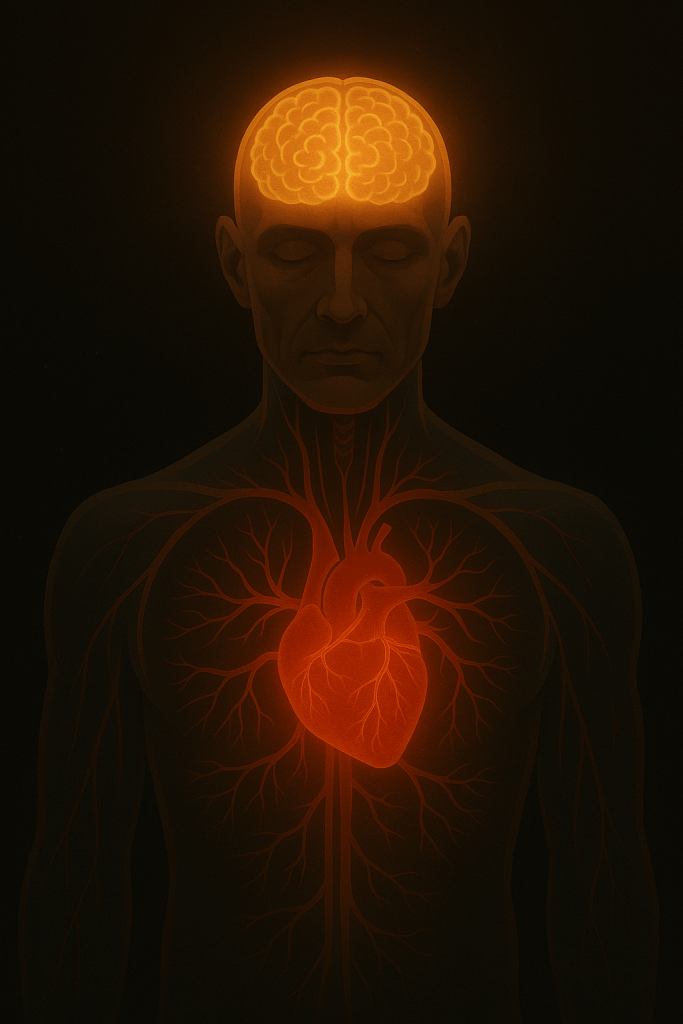
With up to forty thousand neurons in the heart, it is almost as if, in the end, the heart itself blows up the box of the mind. Where the noun-mind tries to contain experience, the heart forces reunion — bringing head and heart back together through a paradoxical collusion inside the sacred disease of stuck and broken addiction.
Steps One, Five, and Ten are not confessions in the moral sense. They are ad-missions — movements toward truth — the labour through which conscience is delivered into the present. The first birth brings a human into life; the second birth brings a human into responsibility.
For many, it is precisely addiction that exposes the failure of the mental box and compels the whole organism to seek unity again. And when this collapse meets the template of the Twelve Step Programme — a body of principles proven by lived evidence rather than theory — delusion is slowly dismantled.
In that process, healthy illusion is restored: the recognition that life is a play of energy experiencing itself through form. Not denial, not fantasy, but the rightful imaginative field in which a human being can live without fragmentation.
When conscience is born, illusion no longer deceives. It plays. Parable resumes its rightful function — carrying meaning across levels without freezing the soul’s development. Weaponised story arrests this second birth and leaves the person stalled between innocence and wisdom. Living story completes it.
The heart returns the mind to its verb-nature. The organism reclaims its person. And what was divided becomes whole enough to begin again.
Only now can consciousness carry its own preciousness through experience without fragmenting. Only now can the executive function bind the person to what serves life rather than substitutes for it. This is not virtue. It is alignment restored.
When clients see this clearly — the psychic stomach, the instinctual heats, the pressure system of feeling, the barometric nature of emotion, the pod-mind’s detachment — relief is palpable. Shame dissolves. Confusion lifts. A person sees themselves from the inside.
And then comes the great turning:
Both the outer body and the inner psyche heal by the same law. When the wound is brought into awareness, the system moves toward self-repair.
Awareness is medicine because conscience is now present to receive it. Unity is the outcome because right and wrong have returned to relationship. The human being — mind, psyche, and animal body — begins its slow return from Mankind’s fragmentation to Humankind’s wholeness.
This is the return of Eden — not innocence regained, but innocence completed by wisdom. The One sees Itself through a unique, unrepeatable person, and love appears as recognition across difference.
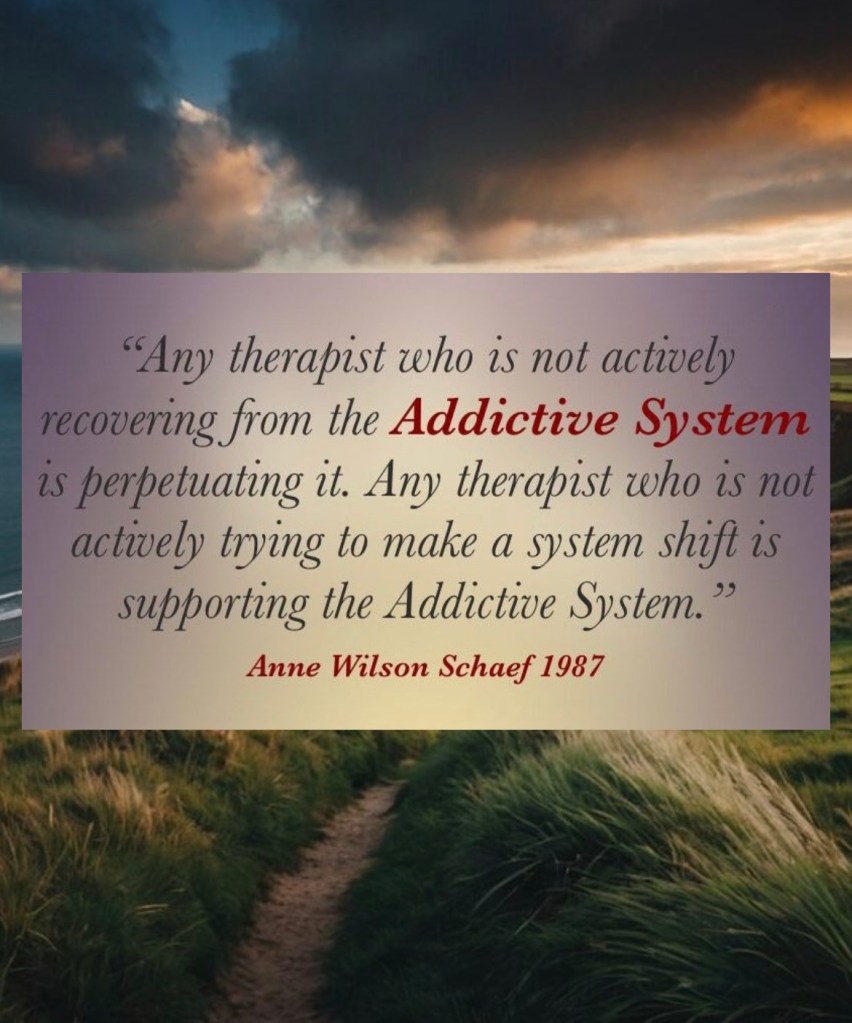
Anne Wilson Schaef named the Addictive System as a cultural field rather than an individual pathology. This observation is included here not as critique, but as a clinical orientation point.
What this reveals is not a technique of self-repair, but a relationship. Awareness does not restore coherence by force or control; it responds. When the whole human being is allowed to register experience without distortion, something larger than the individual appears to be met. Repair occurs as if the organism is answering a call already present — an order that precedes thought, belief, and method. Whatever name is given to this order, it cannot be reduced to psychology alone, yet psychology becomes intelligible in its light.
 the HU man healing