CHAPTER SIX — THE TACTICAL SPIRITUAL

“They plan, and Allah plans — and Allah is the best of planners.” — Qur’an 3:54

Practical spirituality teaches a person how to stand. Tactical spirituality teaches a person how to move. Life does not unfold in straight lines, and neither does healing. There are currents in the world and currents in the self — some lift, some obscure, some conceal, some reveal.

The seeker who begins to live from Withness must learn how to navigate these currents with wisdom, subtlety, responsiveness, and above all, tact. For the Qur’an does not say that human beings plan and God ignores them; it says:

They plan — and God plans.

This means the world is dynamic. Layers of intention act upon one another: human plans, ego plans, cultural plans, systemic plans. Yet above and within all these movements is another Intent — the Creative Plan that holds the seeker, shapes the path, and redirects the one who listens.

Tactical spirituality begins here: recognising that you are moving within a field that is already in motion.

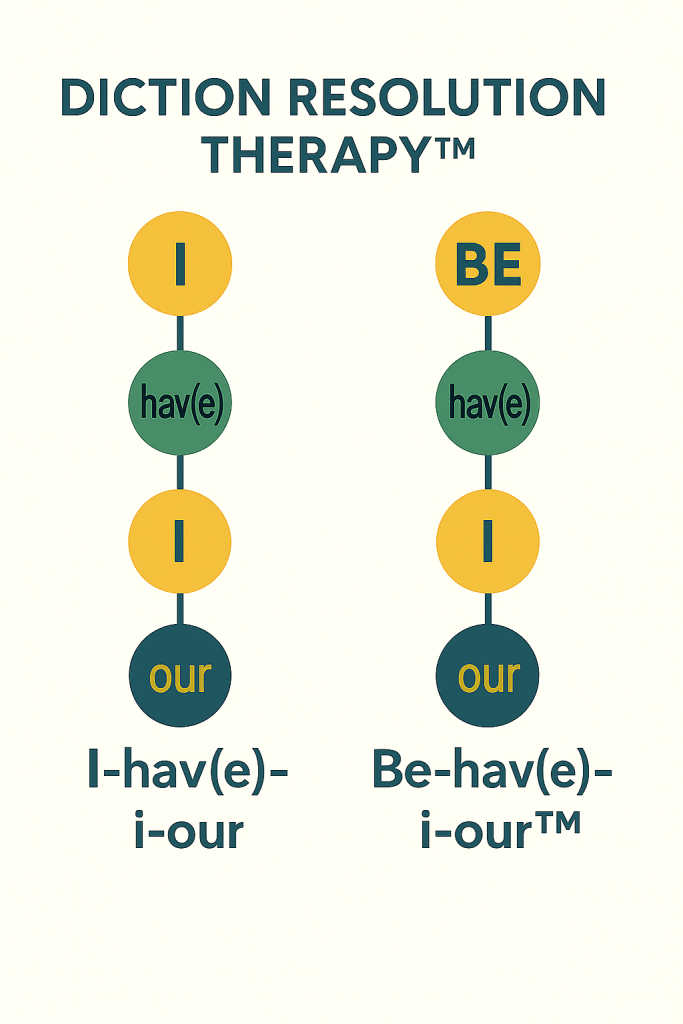
The left-hand word of DRT believes it must control everything: “If I plan enough, I will be safe.” The right-hand word knows otherwise: “I attend, I listen, I adjust — I am being led.”

Tactical spirituality is not manipulation or scheming. It is alignment-in-motion — a willingness to respond to the unfolding moment rather than impose the ego’s agenda upon it. Thus the seeker must learn tact: when to advance, when to retreat, when to pause, when to speak, when to remain silent, when to ask, when to wait, and when to surrender the tactic entirely because a larger Plan is becoming clear.

The Misconception of Power

From Pharaoh in the time of Moses to the emperors of global empires today, the powerful have always believed a quiet lie: that the Angel of Death walks on their leash.

They imagine their planning absolute, their systems unbreakable, their dominance eternal. But history answers this delusion again and again. Empire after empire has discovered that death is loyal to no ruler, and sovereignty belongs to no throne.

Pharaoh believed he commanded fate — yet the Angel passed over the huts of slaves and entered the palaces of the mighty. Rome believed itself unchallengeable — yet a crucified Jew reshaped the world long after Caesar’s breath was dust. Modern empires imagine surveillance, markets, and digital reach have mastered destiny — yet the same pattern holds.

The Angel walks freely. And the Planner is not them.

This is mercy. If human beings truly controlled death, the world would have ended long ago. The powerful confuse strategy with sovereignty. The seeker must not repeat their mistake.

Tactical spirituality knows that the One who plans is not moved by domination but by alignment; not by fear but by purpose; not by force but by presence.

The seeker walks tactically because they walk within a Plan that cannot be manipulated and cannot be dethroned.

The Movements of the Tactical Spiritual

Living tactically means moving with humility inside a world that moves. The Twelve Step lineage teaches continual watchfulness, self-inventory, amends, prayer, meditation, and service — not as moral demands but as tactical movements that keep a person aligned with reality rather than trapped in egoic planning.

The Addictive System has tactics. Ego has tactics. Despair has tactics. Therefore the seeker must learn the counter-tactic of humility, responsiveness, relationality, and subtle listening.

The highest tact is knowing that safety lies not in domination, but in alignment with the Plan that precedes the world.

The Mighty Counsellor

All tact leads to one revelation: the One who plans is also the One who cares. Power without compassion is Pharaoh’s mistake. Strategy without mercy becomes tyranny. Tactics without tenderness become cruelty dressed as wisdom.

But the seeker is not moving towards a throne — they are moving towards a Presence. In the Christian lineage, this Presence is the Mighty Counsellor, the Christ Consciousness, the Word made flesh — the Repaired Pair in perfect wholeness.

And like any true counsellor, He arrives not with doctrine or judgement but with one question — the only question that can open the human heart:

“Where does it hurt, and how can I help you?”

This is not sentiment. It is divine tact. Until a person knows where it hurts, they cannot know where to begin. Until they feel accompanied, they cannot trust the beginning. The Addictive System never asks this question. It demands performance, adjustment, endurance, and numbness.

Global psychiatry rests upon a diagnostic dictionary (DSM-5) designed primarily for practitioner categorisation and reimbursement. But the letters of the acronym reveal a deeper, older truth:

Death, Sex, and Money — the three unchanging lines of force shaping every individual and collective life recorded in the story of Mankind.

All forms of stuck addiction arise from a breakdown in relationship with these three forces. Until a new attitude is established — a healed relationship with Death, Sex, and Money — no movement towards a more consistently Human behaviour is possible.

DSM is not merely a taxonomy. It is a spiritual relational wound.

The Mighty Counsellor asks only what a healer, a sponsor, a true friend, or a Higher Power asks when the soul becomes quiet enough to hear:

“Where does it hurt?”
“How can I help you?”

This is the Groundhog Day lesson: that life changes not through grand plans, but through the quiet, repeated willingness to help others have their best day — not knowing that in doing so, you are shaping your own. And when this dawns, the Just for Today card of the global Twelve Step movement ceases to be a slogan and becomes a living tactic: a way of aligning each ordinary day with the extraordinary Plan that moves beneath it. In this daily tact, the seeker discovers that service is strategy, that presence is protection, and that each repeated “today” becomes a step back into Humankind.

CHAPTER FIVE — THE PRACTICAL SPIRITUAL

Image by my father-in-law, Sudhi Bhattacharjee (28.02.2025), whose gift for seeing bridges — literal and inner — lives on in this chapter.

“If it’s not practical, it’s not spiritual.” — Narcotics Anonymous

Spirituality has been inflated, abstracted, and misrepresented for so long that many young people no longer trust the word. They do not need theories floating above the world. They need a spirituality that helps them walk through the world — especially those who stand at the edge of despair.

Disconnected metaphysics cannot help them. They sense immediately when language is hovering above pain rather than entering it. They have been surrounded by commentary, opinion, and “spiritual content” that does nothing to steady the breath or guide the next step. They know the difference.

This generation has inherited a landscape of ideas without lineage, identity without grounding, and “spirituality” without practice. So when metaphysics approaches unrooted, they turn away — not out of cynicism, but out of accuracy.

Spiritual bypassing is what happens when comfort replaces courage, when insight substitutes for honesty, when abstraction avoids the wound instead of meeting it.

The NA line exposes this clearly: if it cannot be lived, it is not spiritual. If it does not help a person stay present, breathe, act, or withstand the day, it is simply language.

The Twelve Step Fellowships embody this truth. They take no opinion on external systems or cultural debates. Their task is simpler and deeper: to offer what has helped real human beings recover — day by day, step by step. Spirituality here is not concept but companionship.

The Healing Trust works in a parallel way. It does not oppose anything; it offers a Creator-led pathway of healing supported by evidence and defined by its Code of Conduct. Its work is invitational, grounded, practical — the hands become the bridge, reconnecting the person to a field of Withness too deep for words.

DRT stands in this same ethical lineage. It does not claim superiority, nor does it set itself against other modalities. Instead, it offers a way to understand behaviour, being, and consciousness in a framework that is clinically responsible, spiritually grounded, and accountable to the BACP Spirituality Division. It provides orientation — a relational map of where a person stands and how they may move.

Real spirituality does not bypass the brokenness. It meets it. It pairs with it. It grounds the person in a way that restores their capacity to live.

The Next Stone — Practice as the Way Back into Pairing

Practical spirituality begins with the smallest possible movement — small enough that even despair does not forbid it. The Addictive System teaches escalation: everything must be intense or transformative. But the spiritual path teaches the opposite: begin with the next right thing.

This is how de-pair becomes re-pair.

The left-hand and right-hand words of DRT are not distant ideas. They invite different micro-actions, moment by moment.

1. The Pause That Reconnects (Healing Trust resonance)

Before reaction, before collapse, before decision — pause for the length of one breath.

The pause is relational. It is the gesture that says: “I am not alone inside this moment.”

The Healing Trust embodies this silently. The healer pauses first, enters Withness, then invites the client’s field to follow. A young person can do this without training. It is the first re-pairing: breath-with-body, body-with-moment, moment-with-awareness.

2. Naming the State (DRT clarity)

The second act is simply to name which column you are in.

Left-hand word or right-hand word.
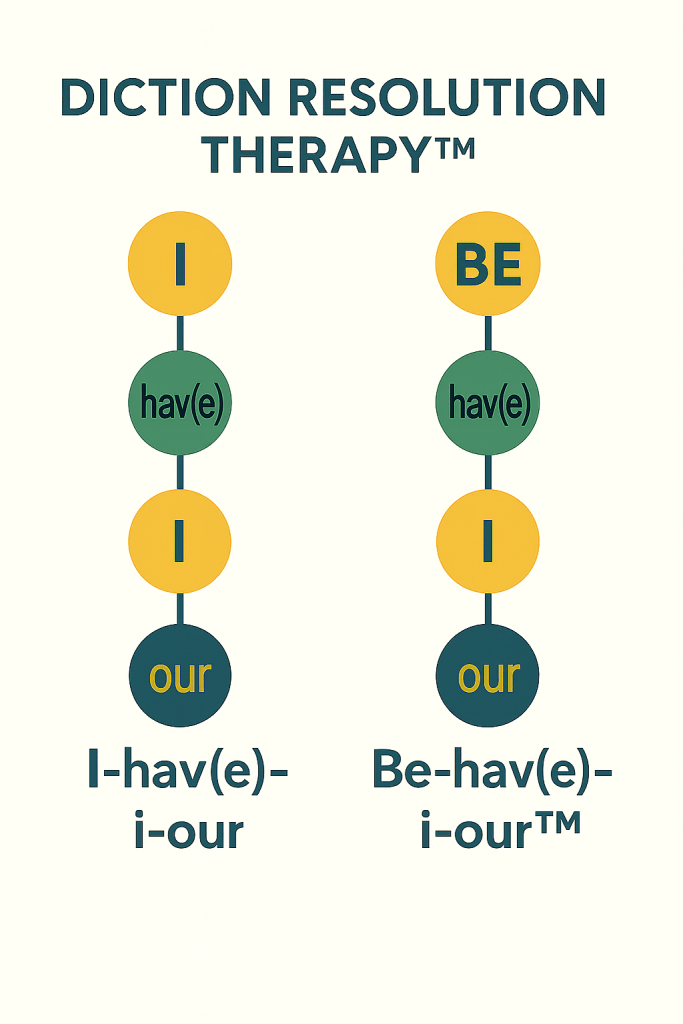
No judgement. No shame. Just naming. In DRT, naming restores orientation; orientation restores agency. Young people do not need doctrines — they need direction.

3. The Small Turn Toward Assistance (12 Step lineage)

The third act is the tiniest turn toward help.

A text to someone safe. A line in a journal. A whispered “Help.” A willingness to believe, for one breath, “I do not have to carry this alone.”

This is the heart of Step One, Step Two, Step Three — the shift from isolation to Withness. It is the smallest motion that reopens the field.

This is practical spirituality.

What Young People Need

They need a spirituality that can be practiced in the middle of despair. A spirituality small enough to begin today, strong enough to hold tomorrow, and honest enough to meet them where they are.

They do not need escape. They need re-pairing. They do not need metaphysics. They need Withness. They do not need perfection. They need participation.

And so Chapter Five ends not with theory, but with the most practical spiritual truth carried through generations of the recovering:

“Without help it is too much for us. But there is One who has all Power — that One is God. May you find Him now.” — Alcoholics Anonymous, p.59

Not later. Not when you feel better. Not when the despair has lifted. Now — with the life you actually have, and the breath that is already yours.