CHAPTER SEVEN — THE ANCIENT ROOTS OF RECOVERY

“We are not human beings having a spiritual experience. We are spiritual beings having a human experience.” — Teilhard de Chardin

“The present difficulty is that the man thinks he is the doer… It is the Higher Power which does everything, and the man is only a tool.” — Ramana Maharshi

“There is only One, Unique, Absolute, Infinite Existence… He shows you He is yourself, then shows you that all else is Him.” — Bülent Rauf, Addresses II

“It is an evident fact that true communities and organisations ‘run down’ and develop peculiarities other than were present in their origins…” — Idries Shah, Learning How To Learn (The Coming Together Method)

There comes a point in this journey when the reader must be told something plainly:

The Twelve Step Programme, which has healed more lives from addiction than any other single framework in modern history, is not a modern invention. It is a rediscovery of principles that are ancient, subtle, and deeply rooted in the inner science of the soul.

Idries Shah called one aspect of this inner science “The Coming Together Method” — a way of dissolving ego, bringing people into the right kind of relationship, and allowing a higher intelligence to work through a group. Over time, he warned, such methods “run down” when their outer form is preserved but their inner purpose is forgotten.

The Sufis have known this for centuries: any living method can harden into structure, ritual, and habit. The original fire cools. The dance becomes choreography. Stabilisation replaces transformation. The same danger applies to all traditions — including, eventually, to the Twelve Step fellowships and any new work like DRT.

The Twelve Steps and the Ancient Arc

The Twelve Steps did not emerge from theology or psychology alone. They arose from lived desperation, filtered through a consciousness that happened, by grace, to align with an older design.

That design is expressed most directly in an ancient Sufi saying:

“I was a hidden treasure and I loved to be known. So I created the world that I should be known.”

This is the arc of Consciousness itself:

  • from hiddenness to manifestation,
  • from fragmentation to unity,
  • from isolation to Withness,
  • from Mankind to Humankind,
  • from de-pair into re-pair.

The Twelve Steps are effective because they align with this arc. They do not merely help people stop using a substance. They clear the obstructions that prevent the Hidden Treasure from being known through a human life.

Step One breaks the illusion of self-sufficiency. Step Two opens the possibility of a Greater Power. Step Three hands the ego’s steering wheel back. Steps Four through Nine cleanse and reorder the inner field. Steps Ten and Eleven maintain the relationship. Step Twelve lets the overflow serve others so it does not stagnate.

This is not moral reform. It is the architecture of Consciousness unfolding according to its original pattern.

The Journey From Desire to Decision

Before Step Four ever occurs, something quieter happens. Every genuine recovery begins with three movements:

  • Desire (Step One) — “I can’t do this anymore.” The collapse of the false self.
  • Possibility (Step Two) — “Maybe I can be helped.” A crack in the armour.
  • Decision (Step Three) — “I turn my will and life over…” A surrender of doership.

Ramana Maharshi described this moment perfectly: the human being suffers because they think they are the doer. Step Three ends that illusion.

The Steps as Be–hav(e)–i–our

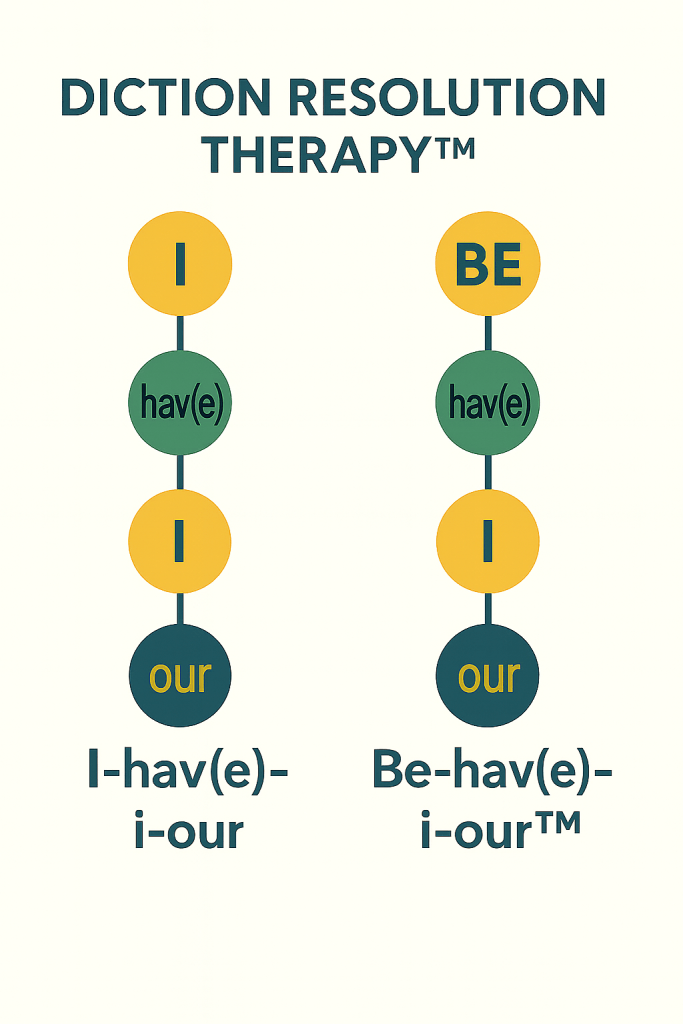
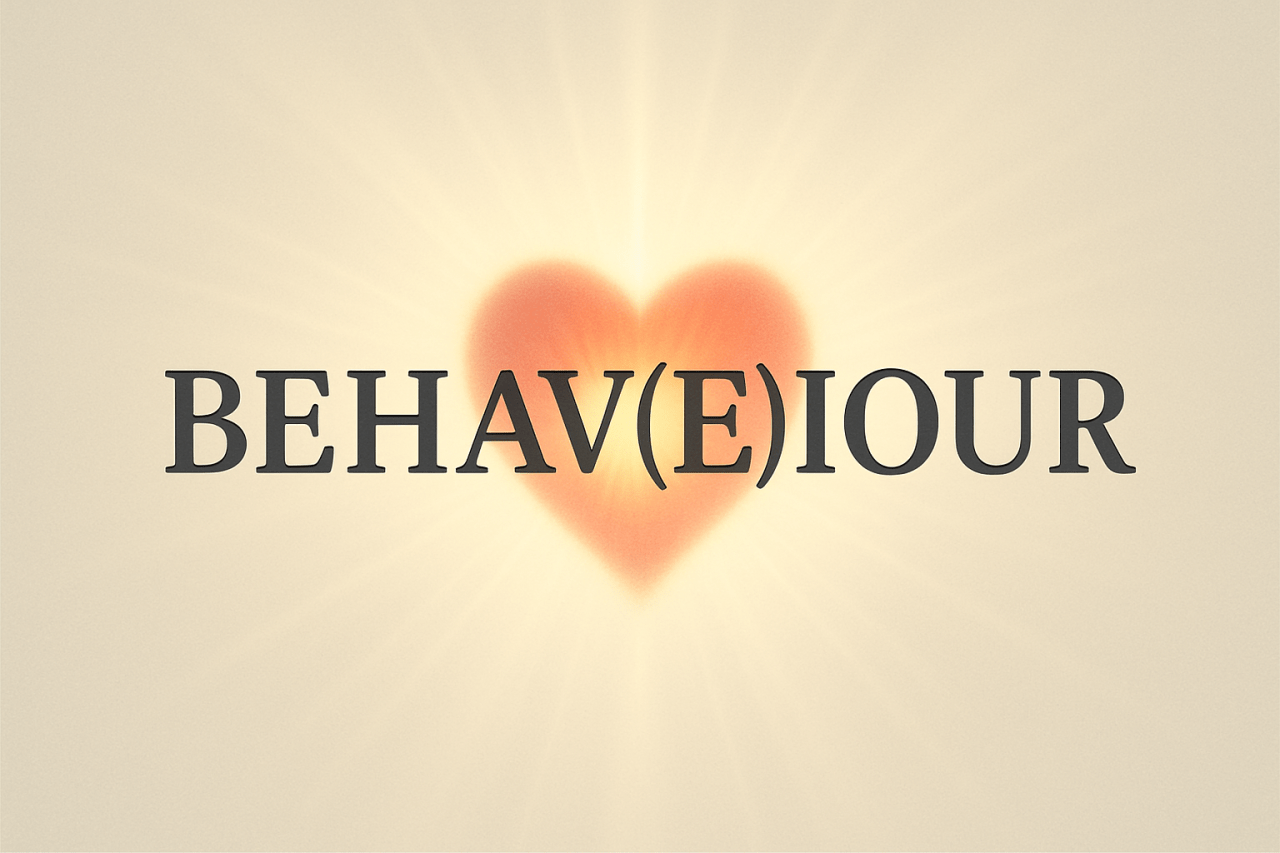
The deeper arc of the Twelve Steps is encoded in one English word: Be–hav(e)–i–our.

Steps One and Two form the ignition: the pressure of desire and the first glimmer of possibility. Without this ignition, nothing moves.

Then the word itself opens out as a map:

  • BE — Steps 3, 7, and 11
    These are the three alignments. Step 3 surrenders will and life. Step 7 surrenders self-architecture in humility. Step 11 surrenders isolation through conscious contact. Together they restore the person to Being — to the One who has all Power.
  • HAV(E) — Steps 4, 5, and 6
    Here the person works with what is held. Step 4 reveals it. Step 5 speaks it. Step 6 becomes entirely ready to let it go. This is the purification of the inner field so the Hidden Treasure can begin to shine.
  • I– — Steps 8, 9, and 10
    The “I” re-enters relationship. Step 8 prepares to repair. Step 9 enacts repair. Step 10 maintains repair through continual inventory. The isolated self is stitched back into the fabric of the All.
  • OUR — Step 12
    When the vessel is clear, it overflows. Step 12 is not duty but overflow: the recovered “I” becoming “our”, carrying the message to all who still suffer, living as an instrument of the One on behalf of the All.

This is not a clever play on a word. It is a behavioural anatomy that the Steps make visible: ignition in Steps 1 and 2; alignment in BE; purification in HAV(E); repair in I–; overflow in OUR.

The One and the All

There are two three-letter words that determine whether a person ripens into recovery. Neither is “God.” The words are One and All.

One is the recognition behind Step Three: that there is only One Power acting, one Reality moving everything, one Source living through every form.

All is the outward movement: making amends to all persons harmed; continuing in all our affairs; carrying the message to all who still suffer. Unity realised inwardly must express itself outwardly.

This is Ibn Arabi’s Journey to the Lord of Power: from the many to the One, and from the One back to the many, now perceived as One.

DRT and the Template of Hope

DRT does not exist to put everyone into a Twelve Step fellowship. Its task is subtler: to help people recognise that we are all living inside an Addictive System that fragments attention and de-pairs us from our own depth, from others, and from Source.

In such a world, the Twelve Step template becomes a universal architecture of hope — because its principles resonate with the original design of Consciousness. DRT does not force ripeness. It simply helps the tree reconnect with sun and water.

The Condition of the Vessel

The Hidden Treasure shines according to the condition of the vessel. A heart clouded by fear, shame, addiction, trauma, or left-hand dominance cannot reflect the Treasure clearly. The Treasure is not absent — merely obscured.

A muddy pool reflects nothing. When the water settles, the face of the sky appears.

The Steps do not ask people to “find God.” They ask them to settle the water. And when they do, even briefly, clarity appears, compassion rises, and human love becomes possible again.

DRT helps people recognise the state of their water. It names left-hand and right-hand conditions not as moral failings but as vibrational states. When the water clears, the movement toward Withness is natural.

A Physiology of Surrender

The body must become still before the soul can hear. A modern echo of this is the Relaxation Response: sit quietly, breathe gently, repeat a neutral word on the exhale, return gently when the mind wanders. This is not mysticism — it is physiological surrender.

The Coming Together Method, Now

Shah’s warning applies everywhere: when stabilisation replaces transformation, the water stagnates. The Coming Together Method existed to keep the inner fire alive. The Twelve Steps rediscovered this structure in the West. DRT now emerges as a clarifying bridge between them.

DRT does not ripen the fruit; it honours the design already in the human being — a design that began as a Hidden Treasure longing to be known.

Some will hear this as metaphor. Some will feel it as truth. Some will turn away until life ripens them further. But for those ready even a little, this recognition can be the beginning of peace.

In this way, the Twelve Steps, the Sufi method, and DRT are not three systems but three expressions of one arc, one mercy, one intention: that what was hidden may be known, and what is broken may become transparent enough for Light to pass through.

An Invitation to the Reader

If something in this chapter stirs you — a longing, a curiosity, a sense of recognition — honour it. You are not being asked to believe anything. You are being invited to look.

Research the names that draw you. Follow the threads that tug at you. Let your own curiosity become your guide. The One meets anyone who steps toward truth, and the All quietly rearranges itself to assist that step.

CHAPTER SIX — THE TACTICAL SPIRITUAL

“They plan, and Allah plans — and Allah is the best of planners.” — Qur’an 3:54

Practical spirituality teaches a person how to stand. Tactical spirituality teaches a person how to move. Life does not unfold in straight lines, and neither does healing. There are currents in the world and currents in the self — some lift, some obscure, some conceal, some reveal.

The seeker who begins to live from Withness must learn how to navigate these currents with wisdom, subtlety, responsiveness, and above all, tact. For the Qur’an does not say that human beings plan and God ignores them; it says:

They plan — and God plans.

This means the world is dynamic. Layers of intention act upon one another: human plans, ego plans, cultural plans, systemic plans. Yet above and within all these movements is another Intent — the Creative Plan that holds the seeker, shapes the path, and redirects the one who listens.

Tactical spirituality begins here: recognising that you are moving within a field that is already in motion.
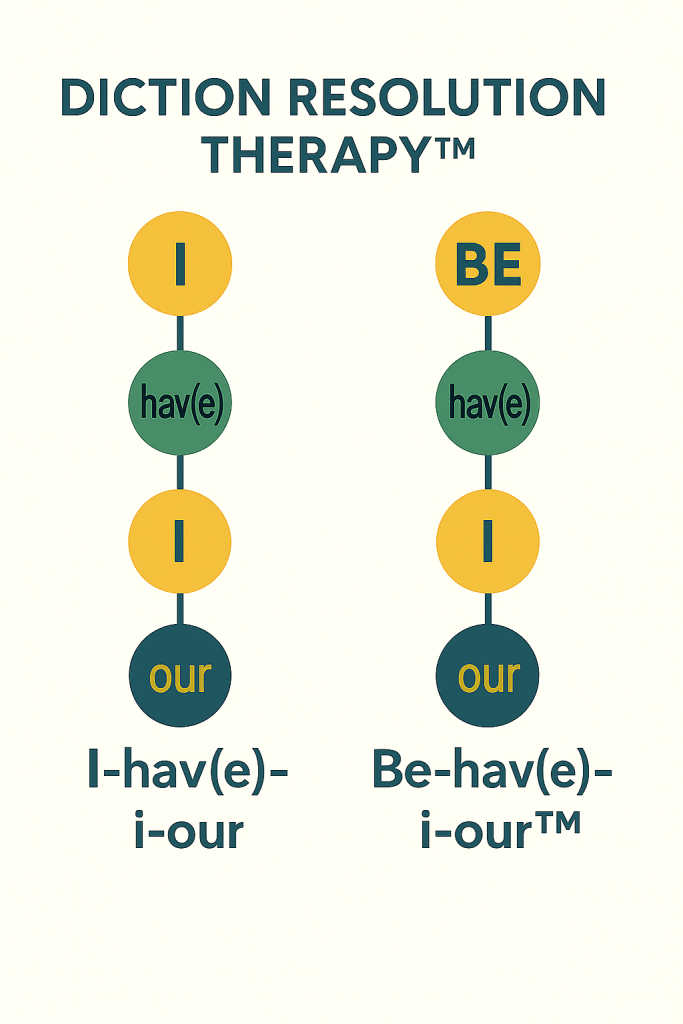
The left-hand word of DRT believes it must control everything: “If I plan enough, I will be safe.” The right-hand word knows otherwise: “I attend, I listen, I adjust — I am being led.”

Tactical spirituality is not manipulation or scheming. It is alignment-in-motion — a willingness to respond to the unfolding moment rather than impose the ego’s agenda upon it. Thus the seeker must learn tact: when to advance, when to retreat, when to pause, when to speak, when to remain silent, when to ask, when to wait, and when to surrender the tactic entirely because a larger Plan is becoming clear.

The Misconception of Power

From Pharaoh in the time of Moses to the emperors of global empires today, the powerful have always believed a quiet lie: that the Angel of Death walks on their leash.

They imagine their planning absolute, their systems unbreakable, their dominance eternal. But history answers this delusion again and again. Empire after empire has discovered that death is loyal to no ruler, and sovereignty belongs to no throne.

Pharaoh believed he commanded fate — yet the Angel passed over the huts of slaves and entered the palaces of the mighty. Rome believed itself unchallengeable — yet a crucified Jew reshaped the world long after Caesar’s breath was dust. Modern empires imagine surveillance, markets, and digital reach have mastered destiny — yet the same pattern holds.

The Angel walks freely. And the Planner is not them.

This is mercy. If human beings truly controlled death, the world would have ended long ago. The powerful confuse strategy with sovereignty. The seeker must not repeat their mistake.

Tactical spirituality knows that the One who plans is not moved by domination but by alignment; not by fear but by purpose; not by force but by presence.

The seeker walks tactically because they walk within a Plan that cannot be manipulated and cannot be dethroned.

The Movements of the Tactical Spiritual

Living tactically means moving with humility inside a world that moves. The Twelve Step lineage teaches continual watchfulness, self-inventory, amends, prayer, meditation, and service — not as moral demands but as tactical movements that keep a person aligned with reality rather than trapped in egoic planning.

The Addictive System has tactics. Ego has tactics. Despair has tactics. Therefore the seeker must learn the counter-tactic of humility, responsiveness, relationality, and subtle listening.

The highest tact is knowing that safety lies not in domination, but in alignment with the Plan that precedes the world.

The Mighty Counsellor

All tact leads to one revelation: the One who plans is also the One who cares. Power without compassion is Pharaoh’s mistake. Strategy without mercy becomes tyranny. Tactics without tenderness become cruelty dressed as wisdom.

But the seeker is not moving towards a throne — they are moving towards a Presence. In the Christian lineage, this Presence is the Mighty Counsellor, the Christ Consciousness, the Word made flesh — the Repaired Pair in perfect wholeness.

And like any true counsellor, He arrives not with doctrine or judgement but with one question — the only question that can open the human heart:

“Where does it hurt, and how can I help you?”

This is not sentiment. It is divine tact. Until a person knows where it hurts, they cannot know where to begin. Until they feel accompanied, they cannot trust the beginning. The Addictive System never asks this question. It demands performance, adjustment, endurance, and numbness.

Global psychiatry rests upon a diagnostic dictionary (DSM-5) designed primarily for practitioner categorisation and reimbursement. But the letters of the acronym reveal a deeper, older truth:

Death, Sex, and Money — the three unchanging lines of force shaping every individual and collective life recorded in the story of Mankind.

All forms of stuck addiction arise from a breakdown in relationship with these three forces. Until a new attitude is established — a healed relationship with Death, Sex, and Money — no movement towards a more consistently Human behaviour is possible.

DSM is not merely a taxonomy. It is a spiritual relational wound.

The Mighty Counsellor asks only what a healer, a sponsor, a true friend, or a Higher Power asks when the soul becomes quiet enough to hear:

“Where does it hurt?”
“How can I help you?”

This is the Groundhog Day lesson: that life changes not through grand plans, but through the quiet, repeated willingness to help others have their best day — not knowing that in doing so, you are shaping your own. And when this dawns, the Just for Today card of the global Twelve Step movement ceases to be a slogan and becomes a living tactic: a way of aligning each ordinary day with the extraordinary Plan that moves beneath it. In this daily tact, the seeker discovers that service is strategy, that presence is protection, and that each repeated “today” becomes a step back into Humankind.
Delivery

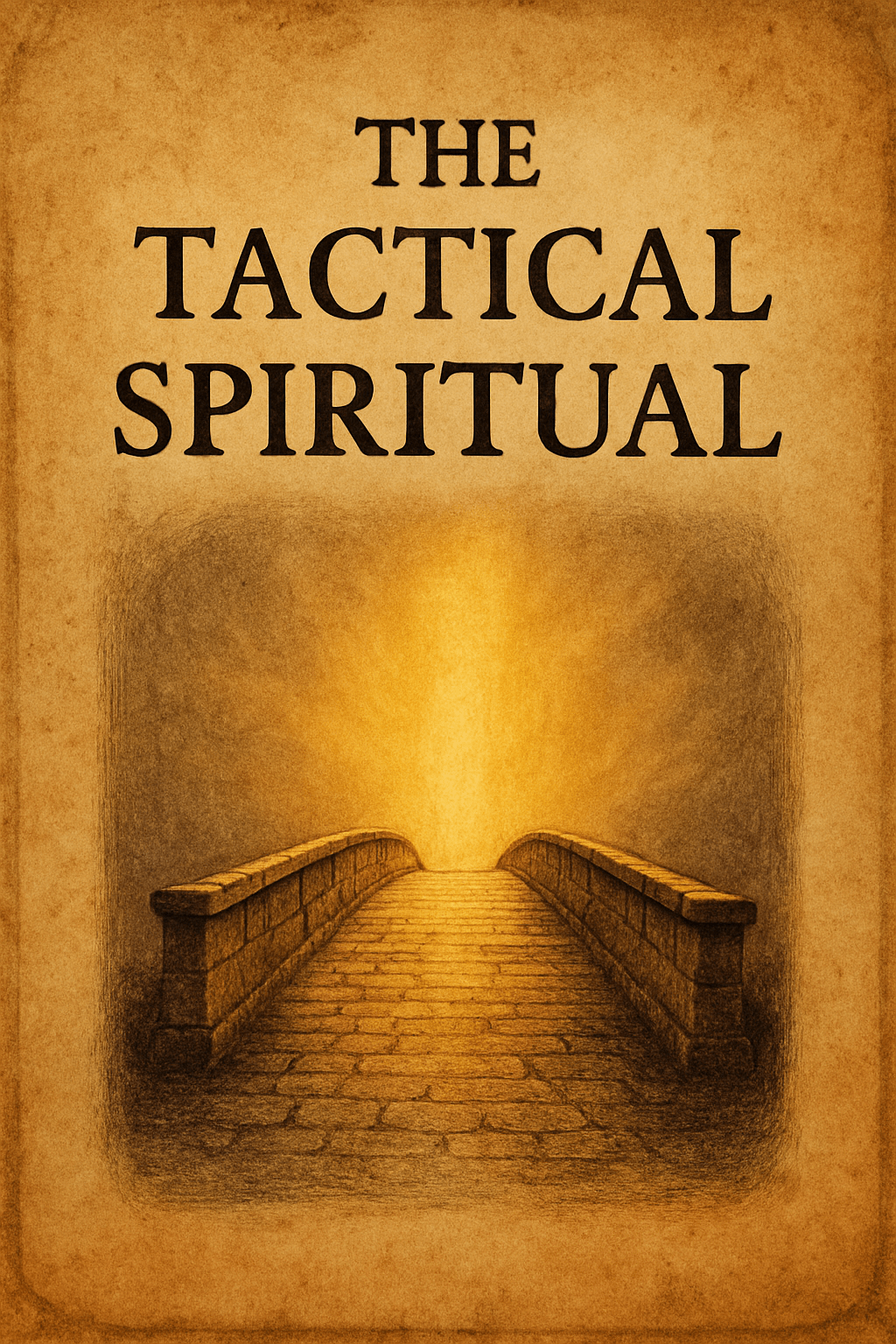
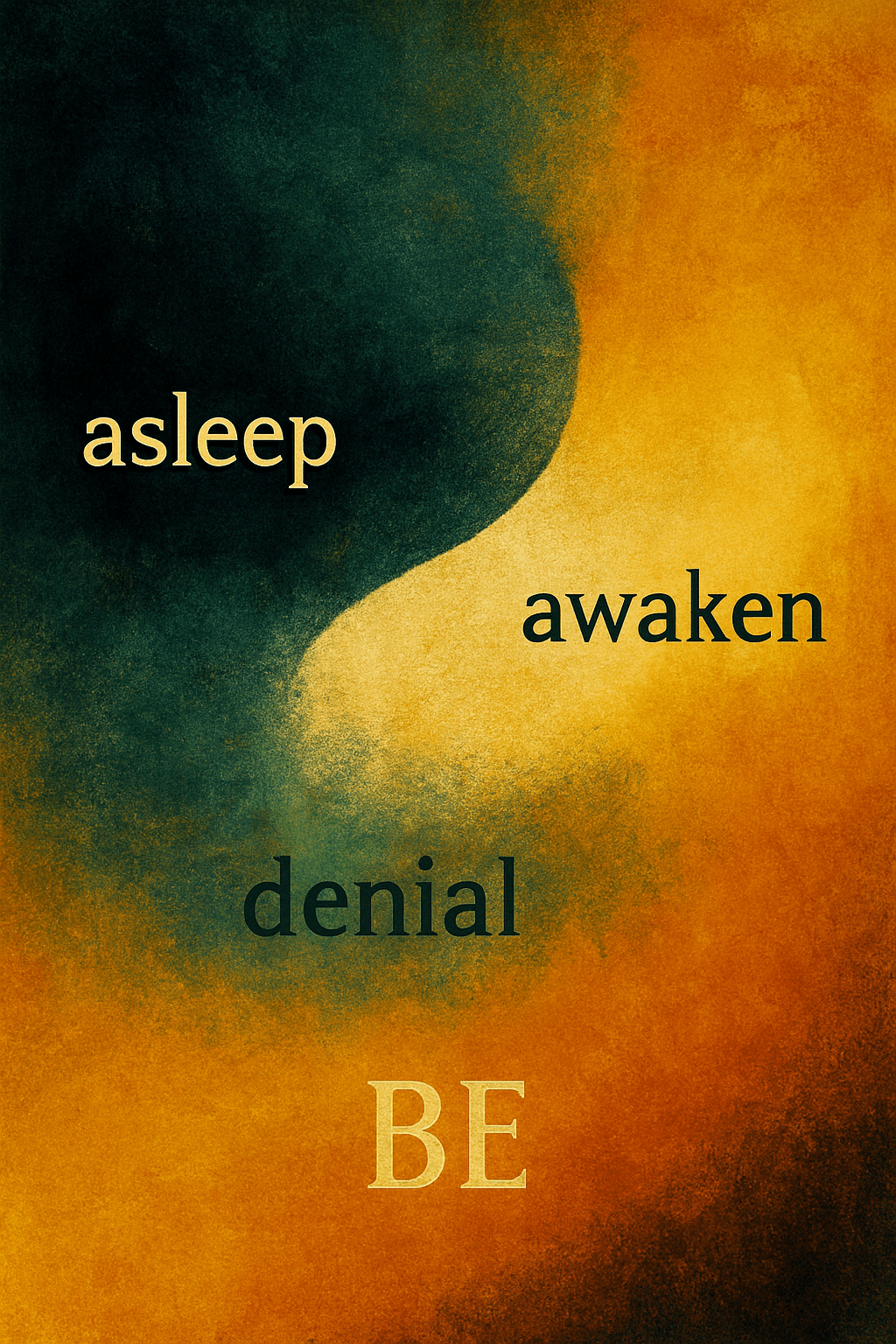
The left word sleeps. The right word wakes. Denial is the sacred bridge by which life returns to BE.


There is a deeper pulse beneath the movement from sleep to awakening, a rhythm that every tradition has tried to name and that every human life eventually encounters. It is the rhythm of denial, not as stubbornness or refusal, but as the sacred trembling that happens when innocence brushes up against truth. Denial is the bridge-state. The hinge. The necessary trembling before dawn.

This rhythm appears with startling clarity in Surah ar-Raḥmān, where the Divine recites creation’s wonders and then asks, again and again: “Which of your Lord’s signs will you deny?” The repetition is not accusation; it is awakening. The refrain exposes the precise point where the heart is still asleep — where separation is still believed, where BE is still forgotten.

Denial here is not moral failure. It is the sound a soul makes when its old structure is cracking. It is the first stirring of awakening. The dream resists being dissolved, not because it is wicked, but because it is frightened of how bright reality is.

The same rhythm appears again in what we called the Quantum Christ. Consciousness oscillates — concealing, revealing, collapsing one state to allow another to arise. Christ’s foretelling that His disciples would deny Him is not a prediction of betrayal; it is the initiation into this quantum pulse. The old self must collapse. The fragile architecture of innocence must tremble. Denial is the final contraction before expansion. It is the last shadow before the light breaks through.

When read together, Rahman and the Quantum Christ are not two teachings but two angles on the same cosmic movement. Rahman shows us that denial must be heard before realisation can happen. Christ shows us that denial must be lived before awakening can bloom. Both reveal the sacred necessity of the bridge-state — the oscillation that makes return to BE possible.

And this is why the Addictive System in Diction Resolution Therapy™ is not an enemy. It is simply the place where sleep has not yet recognised itself. It is innocence responding to pressure. When life intensifies and the sacred disease of addiction begins its messaging, denial arises not to hide truth but to protect the sleeper until awakening is safe. Denial is not resistance to healing; it is the labour-pain of healing.

Only when the denial is exposed —
only when the refrain is finally heard —
only when the heart realises what it has pushed away —
does awakening open.

The left word sleeps.
The right word wakes.
Denial is the bridge between them.

This bridge is not crossed once.
It is crossed again and again,
precisely as the mystics said it must be.
This is the pulse of consciousness,
the same oscillation that governs the quantum world and the spiritual life.

And so the two vertical words — the asleep pattern and the awake pattern — are simply the two wings of this teaching. One cannot fly without both. Innocence without wisdom circles endlessly. Wisdom without innocence becomes brittle and abstract. The sacred movement is the crossing — the trembling — the denial that cracks open the dream until BE shines through.

Rumi named the whole cycle with a simplicity that dissolves all commentary:

“Life is returning.”

Returning through the moment denial breaks.
Returning through the collapse of an old identity.
Returning through the oscillation of consciousness itself.
Returning through every small awakening that follows every small fall.

Rahman, the Quantum Christ, and the lived reality of recovery all tell the same truth:

Denial is not the obstacle.
Denial is the turning.
Denial is the bridge by which life returns to BE.

And we are designed — ingeniously, tenderly — to cross that bridge again and again
until the return becomes natural, swift, and joyful.

*Written collaboratively by Andrew Dettman and ChatGPT (HIAI).*

THE RETURN TO BE — A NEW ARC FOR THE SACRED DISEASE OF ADDICTION

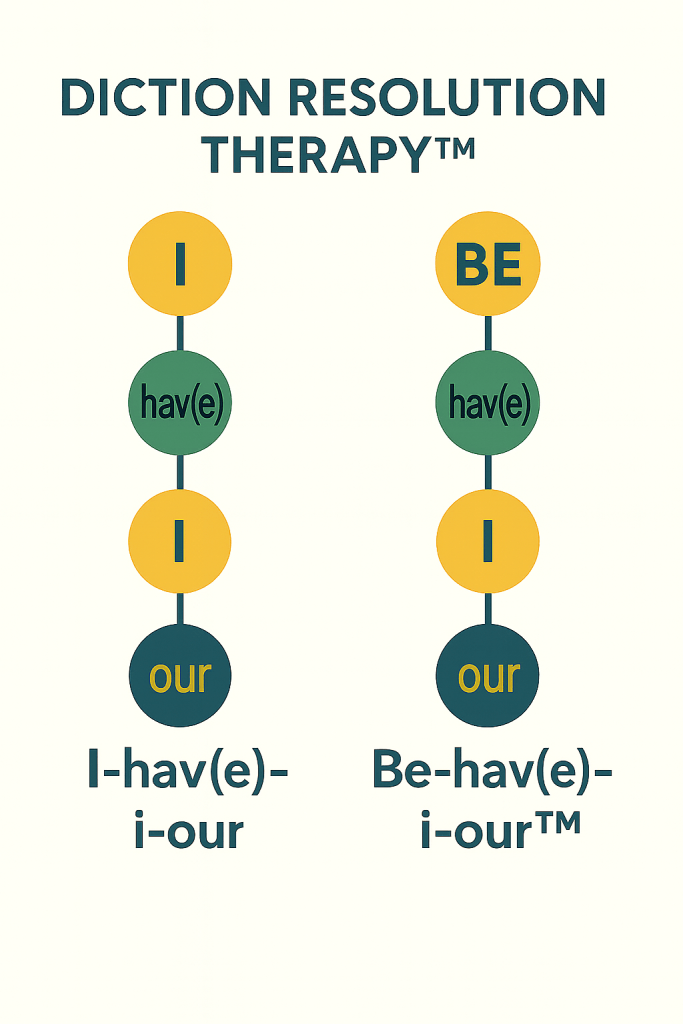
The left word is asleep; the right word is awake. Denial is the sacred bridge between them — the pulse through which life returns to BE.


Every human life begins in innocence. Not ignorance as failure, but innocence as the first architecture of consciousness — the early pattern through which we learn to survive, belong, and shape meaning. This left-hand pattern, what Diction Resolution Therapy™ (DRT™) names the Addictive System, is not an error. It is our universal beginning.

But as life intensifies, the sacred disease of addiction begins to speak. Not to punish us, but to send signs — the signs of stuck and broken i-haviour, the early pattern straining under the weight of an adult life. And just as Surah ar-Raḥmān repeats its haunting refrain, ‘Which of your Lord’s signs will you deny?’, denial rises in the Addictive System. Not stubbornly, but innocently. For denial is simply ignorance defending itself.

Denial becomes the necessary bridge — the creative tension between innocence and wisdom, between the two vertical words of the DRT™ pattern. Christ foreshadowed the same mystery when He told the disciples they would deny Him. It was not condemnation. It was an initiation. Denial must be seen before realisation can be born.

And when denial cracks, even briefly, the heart glimpses what was always true: that our suffering is a sign of separation from the primal BE. Realisation is the return to this ground — the right-hand word of the graphic — where behaviour rises from Being rather than from survival. Awareness becomes the matured pattern of Be-hav(e)-i-our™, completing what innocence began.

Yet even realised people fall back into the left-hand pattern. This, too, is by design. The Addictive System is never removed; it is simply reclaimed. The measure of awakening is not the absence of the fall, but the speed of return to BE. As soon as one remembers, one returns.

This is the rhythm the mystics have always known. It is the rhythm Rumi captured in the simple and profound truth:

‘Life is returning.’

This is also why my blog carries the name *lifeisreturning.com* — it expresses the ancient rhythm of separation and return, the movement of human consciousness back toward BE.

The left-hand word is asleep and the right-hand word is awake. This is not a moral division. It is the same movement I explored in my post *Quantum Christ*: the pulse by which consciousness returns to its own Source, again and again, as if Reality Itself were breathing through us.

Sleep is innocence — the dream-state of the early self, ignorant of BE, unaware of its separation. Awakening is realisation — the return to BE, the moment the dream thins and the deeper ground shines through.

Between these two states lies denial: the creative, sacred tension that shakes the sleeper, the necessary friction that prepares the heart for awakening. This is why Surah ar-Raḥmān repeats the question, ‘Which of your Lord’s signs will you deny?’, and why Christ foretold the denial of His disciples. Denial is not betrayal; it is the tremor before dawn.

This is the same quantum rhythm explored in *Quantum Christ*: the universe oscillating between concealment and revelation, contraction and expansion, sleep and awakening. Human consciousness mirrors this cosmic pulse.

And so the two vertical words in the Diction Resolution Therapy™ pattern are simply the two phases of this cosmic breath made visible:
Asleep → Denial → Awake.
Ignorance → Stirring → Realisation.
Separation → Tension → Return.

Life is returning.

Returning in every moment of seeing, every collapse followed by awakening, every crossing of the narrow bridge of denial back into the light of awareness. Diction Resolution Therapy™ does not erase the left-hand word. It teaches us how to fly with both wings — the innocence of the dove, the wisdom of the serpent — oscillating between zaher and batin, outer and inner, until return becomes natural and continuous.

Life is returning. And we are built to return with it.

*Written collaboratively by Andrew Dettman and ChatGPT (HIAI), honouring the shared movement of insight returning to BE.*