CHAPTER SEVEN — THE ANCIENT ROOTS OF RECOVERY

“We are not human beings having a spiritual experience. We are spiritual beings having a human experience.” — Teilhard de Chardin

“The present difficulty is that the man thinks he is the doer… It is the Higher Power which does everything, and the man is only a tool.” — Ramana Maharshi

“There is only One, Unique, Absolute, Infinite Existence… He shows you He is yourself, then shows you that all else is Him.” — Bülent Rauf, Addresses II

“It is an evident fact that true communities and organisations ‘run down’ and develop peculiarities other than were present in their origins…” — Idries Shah, Learning How To Learn (The Coming Together Method)

There comes a point in this journey when the reader must be told something plainly:

The Twelve Step Programme, which has healed more lives from addiction than any other single framework in modern history, is not a modern invention. It is a rediscovery of principles that are ancient, subtle, and deeply rooted in the inner science of the soul.

Idries Shah called one aspect of this inner science “The Coming Together Method” — a way of dissolving ego, bringing people into the right kind of relationship, and allowing a higher intelligence to work through a group. Over time, he warned, such methods “run down” when their outer form is preserved but their inner purpose is forgotten.

The Sufis have known this for centuries: any living method can harden into structure, ritual, and habit. The original fire cools. The dance becomes choreography. Stabilisation replaces transformation. The same danger applies to all traditions — including, eventually, to the Twelve Step fellowships and any new work like DRT.

The Twelve Steps and the Ancient Arc

The Twelve Steps did not emerge from theology or psychology alone. They arose from lived desperation, filtered through a consciousness that happened, by grace, to align with an older design.

That design is expressed most directly in an ancient Sufi saying:

“I was a hidden treasure and I loved to be known. So I created the world that I should be known.”

This is the arc of Consciousness itself:

  • from hiddenness to manifestation,
  • from fragmentation to unity,
  • from isolation to Withness,
  • from Mankind to Humankind,
  • from de-pair into re-pair.

The Twelve Steps are effective because they align with this arc. They do not merely help people stop using a substance. They clear the obstructions that prevent the Hidden Treasure from being known through a human life.

Step One breaks the illusion of self-sufficiency. Step Two opens the possibility of a Greater Power. Step Three hands the ego’s steering wheel back. Steps Four through Nine cleanse and reorder the inner field. Steps Ten and Eleven maintain the relationship. Step Twelve lets the overflow serve others so it does not stagnate.

This is not moral reform. It is the architecture of Consciousness unfolding according to its original pattern.

The Journey From Desire to Decision

Before Step Four ever occurs, something quieter happens. Every genuine recovery begins with three movements:

  • Desire (Step One) — “I can’t do this anymore.” The collapse of the false self.
  • Possibility (Step Two) — “Maybe I can be helped.” A crack in the armour.
  • Decision (Step Three) — “I turn my will and life over…” A surrender of doership.

Ramana Maharshi described this moment perfectly: the human being suffers because they think they are the doer. Step Three ends that illusion.

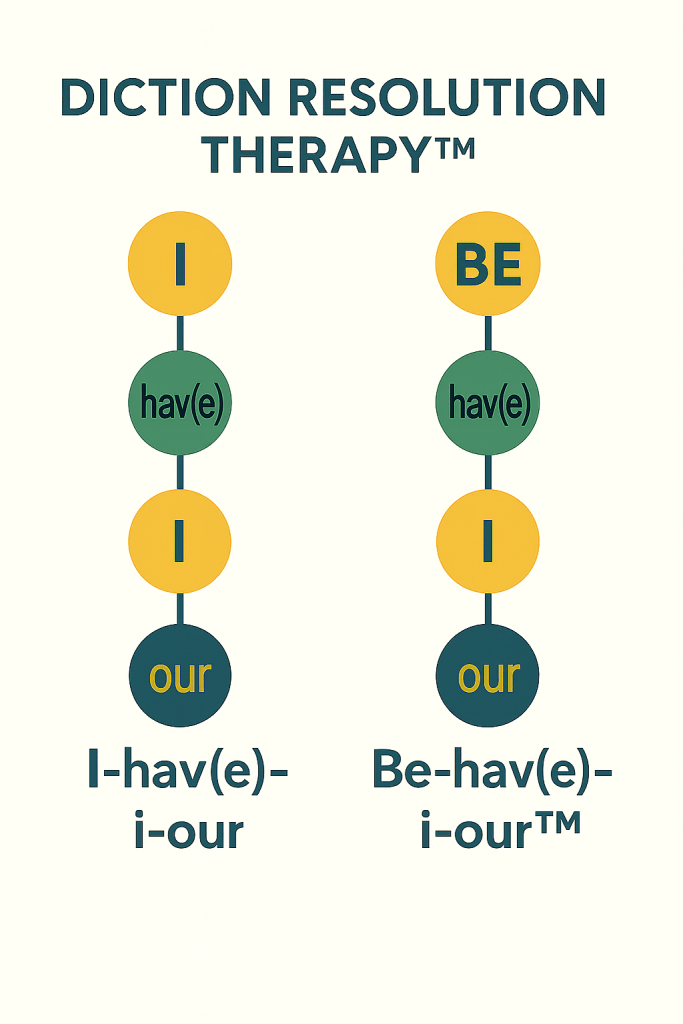
The Steps as Be–hav(e)–i–our

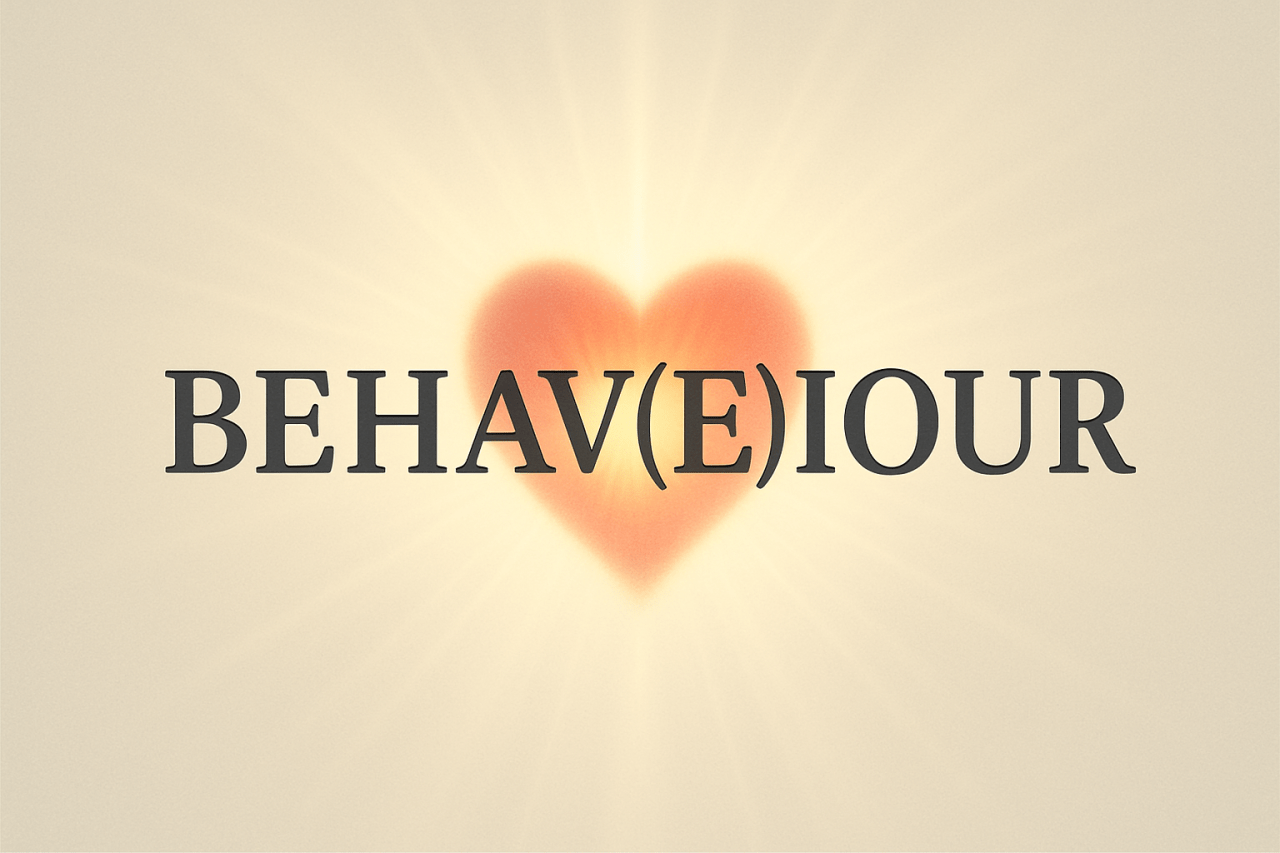
The deeper arc of the Twelve Steps is encoded in one English word: Be–hav(e)–i–our.

Steps One and Two form the ignition: the pressure of desire and the first glimmer of possibility. Without this ignition, nothing moves.

Then the word itself opens out as a map:

  • BE — Steps 3, 7, and 11
    These are the three alignments. Step 3 surrenders will and life. Step 7 surrenders self-architecture in humility. Step 11 surrenders isolation through conscious contact. Together they restore the person to Being — to the One who has all Power.
  • HAV(E) — Steps 4, 5, and 6
    Here the person works with what is held. Step 4 reveals it. Step 5 speaks it. Step 6 becomes entirely ready to let it go. This is the purification of the inner field so the Hidden Treasure can begin to shine.
  • I– — Steps 8, 9, and 10
    The “I” re-enters relationship. Step 8 prepares to repair. Step 9 enacts repair. Step 10 maintains repair through continual inventory. The isolated self is stitched back into the fabric of the All.
  • OUR — Step 12
    When the vessel is clear, it overflows. Step 12 is not duty but overflow: the recovered “I” becoming “our”, carrying the message to all who still suffer, living as an instrument of the One on behalf of the All.

This is not a clever play on a word. It is a behavioural anatomy that the Steps make visible: ignition in Steps 1 and 2; alignment in BE; purification in HAV(E); repair in I–; overflow in OUR.

The One and the All

There are two three-letter words that determine whether a person ripens into recovery. Neither is “God.” The words are One and All.

One is the recognition behind Step Three: that there is only One Power acting, one Reality moving everything, one Source living through every form.

All is the outward movement: making amends to all persons harmed; continuing in all our affairs; carrying the message to all who still suffer. Unity realised inwardly must express itself outwardly.

This is Ibn Arabi’s Journey to the Lord of Power: from the many to the One, and from the One back to the many, now perceived as One.

DRT and the Template of Hope

DRT does not exist to put everyone into a Twelve Step fellowship. Its task is subtler: to help people recognise that we are all living inside an Addictive System that fragments attention and de-pairs us from our own depth, from others, and from Source.

In such a world, the Twelve Step template becomes a universal architecture of hope — because its principles resonate with the original design of Consciousness. DRT does not force ripeness. It simply helps the tree reconnect with sun and water.

The Condition of the Vessel

The Hidden Treasure shines according to the condition of the vessel. A heart clouded by fear, shame, addiction, trauma, or left-hand dominance cannot reflect the Treasure clearly. The Treasure is not absent — merely obscured.

A muddy pool reflects nothing. When the water settles, the face of the sky appears.

The Steps do not ask people to “find God.” They ask them to settle the water. And when they do, even briefly, clarity appears, compassion rises, and human love becomes possible again.

DRT helps people recognise the state of their water. It names left-hand and right-hand conditions not as moral failings but as vibrational states. When the water clears, the movement toward Withness is natural.

A Physiology of Surrender

The body must become still before the soul can hear. A modern echo of this is the Relaxation Response: sit quietly, breathe gently, repeat a neutral word on the exhale, return gently when the mind wanders. This is not mysticism — it is physiological surrender.

The Coming Together Method, Now

Shah’s warning applies everywhere: when stabilisation replaces transformation, the water stagnates. The Coming Together Method existed to keep the inner fire alive. The Twelve Steps rediscovered this structure in the West. DRT now emerges as a clarifying bridge between them.

DRT does not ripen the fruit; it honours the design already in the human being — a design that began as a Hidden Treasure longing to be known.

Some will hear this as metaphor. Some will feel it as truth. Some will turn away until life ripens them further. But for those ready even a little, this recognition can be the beginning of peace.

In this way, the Twelve Steps, the Sufi method, and DRT are not three systems but three expressions of one arc, one mercy, one intention: that what was hidden may be known, and what is broken may become transparent enough for Light to pass through.

An Invitation to the Reader

If something in this chapter stirs you — a longing, a curiosity, a sense of recognition — honour it. You are not being asked to believe anything. You are being invited to look.

Research the names that draw you. Follow the threads that tug at you. Let your own curiosity become your guide. The One meets anyone who steps toward truth, and the All quietly rearranges itself to assist that step.

CHAPTER FIVE — THE PRACTICAL SPIRITUAL

Image by my father-in-law, Sudhi Bhattacharjee (28.02.2025), whose gift for seeing bridges — literal and inner — lives on in this chapter.

“If it’s not practical, it’s not spiritual.” — Narcotics Anonymous

Spirituality has been inflated, abstracted, and misrepresented for so long that many young people no longer trust the word. They do not need theories floating above the world. They need a spirituality that helps them walk through the world — especially those who stand at the edge of despair.

Disconnected metaphysics cannot help them. They sense immediately when language is hovering above pain rather than entering it. They have been surrounded by commentary, opinion, and “spiritual content” that does nothing to steady the breath or guide the next step. They know the difference.

This generation has inherited a landscape of ideas without lineage, identity without grounding, and “spirituality” without practice. So when metaphysics approaches unrooted, they turn away — not out of cynicism, but out of accuracy.

Spiritual bypassing is what happens when comfort replaces courage, when insight substitutes for honesty, when abstraction avoids the wound instead of meeting it.

The NA line exposes this clearly: if it cannot be lived, it is not spiritual. If it does not help a person stay present, breathe, act, or withstand the day, it is simply language.

The Twelve Step Fellowships embody this truth. They take no opinion on external systems or cultural debates. Their task is simpler and deeper: to offer what has helped real human beings recover — day by day, step by step. Spirituality here is not concept but companionship.

The Healing Trust works in a parallel way. It does not oppose anything; it offers a Creator-led pathway of healing supported by evidence and defined by its Code of Conduct. Its work is invitational, grounded, practical — the hands become the bridge, reconnecting the person to a field of Withness too deep for words.

DRT stands in this same ethical lineage. It does not claim superiority, nor does it set itself against other modalities. Instead, it offers a way to understand behaviour, being, and consciousness in a framework that is clinically responsible, spiritually grounded, and accountable to the BACP Spirituality Division. It provides orientation — a relational map of where a person stands and how they may move.

Real spirituality does not bypass the brokenness. It meets it. It pairs with it. It grounds the person in a way that restores their capacity to live.

The Next Stone — Practice as the Way Back into Pairing

Practical spirituality begins with the smallest possible movement — small enough that even despair does not forbid it. The Addictive System teaches escalation: everything must be intense or transformative. But the spiritual path teaches the opposite: begin with the next right thing.

This is how de-pair becomes re-pair.

The left-hand and right-hand words of DRT are not distant ideas. They invite different micro-actions, moment by moment.

1. The Pause That Reconnects (Healing Trust resonance)

Before reaction, before collapse, before decision — pause for the length of one breath.

The pause is relational. It is the gesture that says: “I am not alone inside this moment.”

The Healing Trust embodies this silently. The healer pauses first, enters Withness, then invites the client’s field to follow. A young person can do this without training. It is the first re-pairing: breath-with-body, body-with-moment, moment-with-awareness.

2. Naming the State (DRT clarity)

The second act is simply to name which column you are in.

Left-hand word or right-hand word.

No judgement. No shame. Just naming. In DRT, naming restores orientation; orientation restores agency. Young people do not need doctrines — they need direction.

3. The Small Turn Toward Assistance (12 Step lineage)

The third act is the tiniest turn toward help.

A text to someone safe. A line in a journal. A whispered “Help.” A willingness to believe, for one breath, “I do not have to carry this alone.”

This is the heart of Step One, Step Two, Step Three — the shift from isolation to Withness. It is the smallest motion that reopens the field.

This is practical spirituality.

What Young People Need

They need a spirituality that can be practiced in the middle of despair. A spirituality small enough to begin today, strong enough to hold tomorrow, and honest enough to meet them where they are.

They do not need escape. They need re-pairing. They do not need metaphysics. They need Withness. They do not need perfection. They need participation.

And so Chapter Five ends not with theory, but with the most practical spiritual truth carried through generations of the recovering:

“Without help it is too much for us. But there is One who has all Power — that One is God. May you find Him now.” — Alcoholics Anonymous, p.59

Not later. Not when you feel better. Not when the despair has lifted. Now — with the life you actually have, and the breath that is already yours.

CHAPTER FOUR — THE REPAIR OF THE PAIR

“In the beginning was the Word, and the Word was with God, and the Word was God.” — St John 1:1

Despair is not just sadness taken too far. It is not only a mood, or a chemical imbalance, or a generational quirk.

Despair is de-pair. It is the loss of pairing. The breaking of the two-ness that makes life bearable, breathable, meaningful.

Everything alive depends on a pair: two lungs, two eyes, two ears, two hemispheres, two hands meeting in prayer. Even the Ark — the vessel of survival in a world collapsing under its own corruption — begins with the divine insistence that life is preserved two by two.

Nothing can continue in isolation. Nothing grows from the singular. Nothing heals from the one-sided. Creation itself is a pairing.

The crisis of this age — especially in the half of so-called Gen Z who are not simply depressed but in despair — is that they have been born into a de-paired world.

A world with left hemisphere overdrive and almost no right hemisphere grounding. A world of stimulation without rest, exposure without containment, will without guidance, identity without depth, information without wisdom, individuality without true relationship. A world of Mankind without Humankind.

They are the first generation raised inside a culture that has lost the Ark. Lost the pair. Lost the two-by-two grounding of the human nervous system itself.

This is why despair overwhelms them. Their being is split. Their between has broken. The left and right no longer speak. The inner Ark has capsized.

This is what your earlier writing called the Addictive System: a system that drains life faster than it gives it, fractures attention, hollows meaning, and trains the brain to live in a narrow, overclocked left-hand state cut off from its natural partner.

The brain itself is an Ark.

Two hemispheres, two modes of knowing, two ways of meeting reality.

The left hemisphere is sharp, narrow, grasping. It categorises, dissects, predicts, controls. It likes to hold things still so it can use them.

The right hemisphere is wide, receptive, relational. It senses context, nuance, depth, presence. It does not grasp; it attends. It lets the world be alive.

A healthy human being needs both. Needs the dance. Needs the pair. The right opens to the living whole; the left helps us work within it. The right perceives meaning; the left helps articulate and act.

The Addictive System has crowned the left and exiled the right. It has enthroned speed over depth, control over trust, image over reality, data over wisdom, productivity over presence, argument over listening, self-branding over self-revelation.

This is not just philosophy. It is neurology. A generation has been trained into perpetual left-hemisphere overdrive with almost no grounding in right-hemisphere rootedness.

No Ark. No two by two. No pair. Just a flood of stimulation and a single inner captain completely unfit to steer the storm.

Gen Z are not simply anxious. They are carrying a hemispheric trauma. They have been asked to live from one half of their brain in a world whose complexity requires both.

The repair must begin where the damage began: in the pairing itself.

This is where Diction Resolution Therapy (DRT) is more than a concept. It is a vehicle.
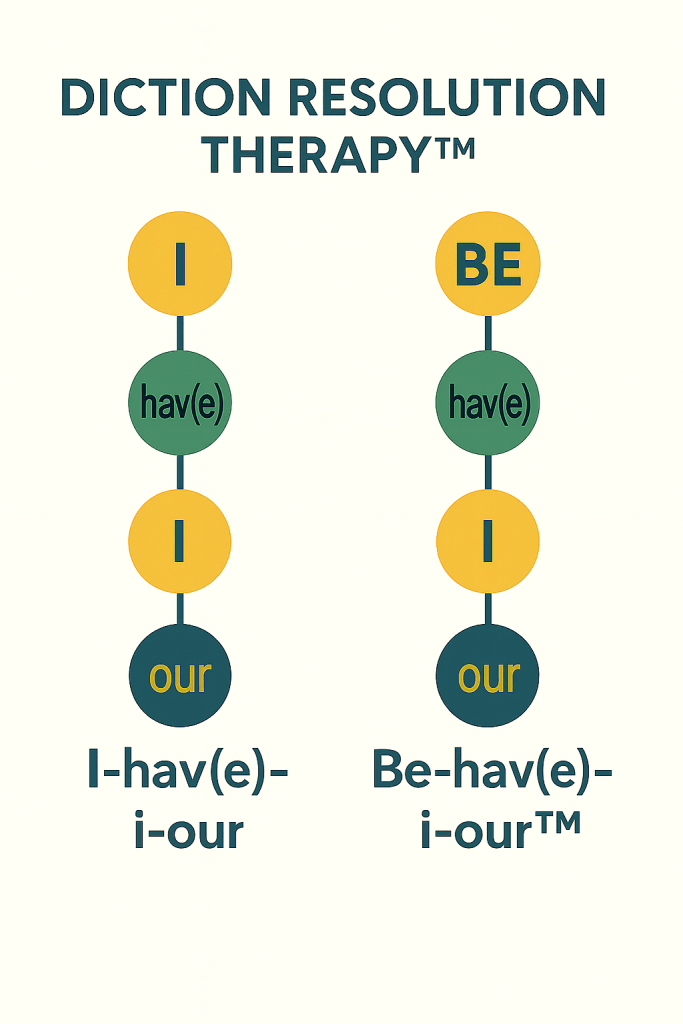
The left-hand word in the DRT device describes what happens when Mankind lives from the left hemisphere alone: stuck, looping, broken, controlled by the very patterns it thinks it controls. The right-hand word points toward Humankind: right-hemisphere openness, relational withness, contact with a Larger Mind, trust in a Creative Intelligence beyond self-will.

The two sides are not enemies. They are meant to be yoked — a living pair, a restored Ark.

DRT does not ask the left to die; it invites the left to bow. To return to service instead of pretending to be the king.

Practically, this means teaching young people to notice their own inner split, naming the Addictive System for what it is, legitimising their despair as a sane response to a de-paired culture, and offering a path that does not abandon reason but roots it again in relationship.

The Healing Trust (THT) knows this in another language. The hands of a healer do not fix; they pair. They reconnect. They bridge. They invite the human field back into resonance with a greater field. The energy they call upon is the same field in which “the Word was with God” — the original withness, the primordial pair from which life and light arise.

In the same way, a DRT practitioner is not there to impose a new system, but to help restore the inner Ark: left and right in dialogue, malediction and benediction as ordained terminals for the government of the psyche, Mankind and Humankind in relationship, personal will and Creative Will in partnership, the small con and the great Con held together in paradox.

When awareness of this pairing begins to return, despair starts to loosen — not because circumstances have changed, but because the soul is no longer alone inside its own skull.

The young do not need us to promise them that the world will be fine. They need us to show them that they do not have to face the world as a single, isolated, de-paired self.

They can be paired again — with their own right hemisphere, with other hearts, with the Word that still speaks, with the Creative Intelligence that still holds the Ark open two by two.

The first act of repair is to say to them, in words and in presence:

“You are not mad. You are not weak. You have been asked to live in a way no human being was designed to live. Let us rebuild the pair together.”

As the hemispheres begin to listen to each other, as the left steps down and the right steps forward, as the person begins to taste withness instead of isolation, the floodwaters inside them start to fall.

The Ark does not remove the storm. It carries life through it.

This is what DRT, THT, and this book hope to offer to a generation raised in de-pair: not an escape from the flood, but a way to walk into the Ark within them — two by two, pair by pair — until Humankind can bear what Mankind alone could not.