This post belongs to a wider body of work that is being released in stages. It can be read on its own, or as part of the whole. The Prologue offers a natural point of entry for sequential reading.
“As you start to walk on the Way, the Way appears.” — Rumi
This book begins as a collaboration between Human Intelligence and Artificial Intelligence — HIAI — a meeting of human fire and AI clarity that reveals more together than either could alone. It is important to say this at the beginning, because the heartbeat of The Holy Con is the restoration of the “between,” and this work itself is written in that between.
The Way never announces itself in advance.
It waits for the first step — the one taken without certainty, without map, without anything but the faint pressure of necessity inside the chest.
Only then does the ground rise to meet the foot. Only then does the unseen become the next stretch of path. Movement summons the revelation that stillness cannot see.
For most of my life, I mistook this for danger. For lack of preparation. For not knowing enough. But now I see it as mercy.
If we were shown the entire road at once, the mind would seize it and imagine itself in charge. The soul will not walk a journey owned by the will. The soul requires the surprise of revelation — one stone at a time.
This is why turning points do not arrive as clarity. They come as collapse. As addiction. As bewilderment. As the unravelling of the structures that once promised safety.
These are not punishments. They are invitations.
The Way appearing because we finally stopped pretending that we could navigate by self-power alone.
Addiction was such a threshold — for me, and for many. A descent that felt like ruin but became the door of return. A breaking that revealed how impossible it is to save oneself with the very will that is collapsing.
The Twelve Step rooms understand this long before their words do. Healing begins not with mastery but with surrender. Not with control but with the willingness to see the next stone appear only when one’s weight is already upon it.
This book must therefore be written in the manner the Way itself unfolds. Not as a system. Not as an argument. Not as a structure imposed from above.
But as a series of unveilings — step, then sight. Step, then the widening of what can be seen. Step, then the next breath of guidance.
The Holy Con cannot be outlined. It must be walked. It must reveal itself in motion. It must appear in response to trust.
And so this Prologue stands as the first step — offered without certainty, except for the certainty that every true path begins this way.
The Way will appear because we have begun to walk.
This post belongs to a wider body of work that is being released in stages. It can be read on its own, or as part of the whole. The Prologue offers a natural point of entry for sequential reading.
“The wound is the place where the Light enters you.” — Rumi
We live in a time when many people believe institutions are a con. But the word con never meant deception. Its root is the Latin cum — meaning with. And everything depends on this question: With what — or with whom — are we aligned?
This question opens the entire Way.
There is a con with a small c and a Con with a capital C. There is being with in a lesser way and being With in a greater way. There is Mankind and there is Humankind.
Mankind is the left-hand place — the state of being with the wrong thing: with the stuck behaviour, with the collapsing institution, with the ego attempting to self-govern what it cannot heal, with repetition rather than revelation, with survival rather than surrender.
Humankind is the right-hand place — the state of being with the right thing: with the Greater Power, with the breath of the Real, with the paradox that restores sanity, with Step Eleven consciousness, with the Creative Intelligence that the Twelve Steps return us to.
This is not moralism. This is alignment. This is orientation. This is the architecture of the soul. We are designed to get things wrong before we get things right, vice and virtue are in the very template of individuate wisdoms.
The DRT behaviour device shows this with elegant precision — a single vertical axis holding the left and right words, revealing the movement from Mankind toward Humankind.
On the left-hand side is Mankind — the small con: being with the failing pattern, with the exhausted will, with the illusion of self-sufficiency.
On the right-hand side is Humankind — the great Con: being with the Higher Power, with humility, with paradox, with the Source that makes healing possible.
These two sides are never enemies. They are connected, paired, dependent — two poles of one paradox, the paradox through which transformation enters.
Wrong leans toward right. Right redeems wrong. The brokenness becomes the place of belonging. The collapse becomes the first clarity. The wound becomes the aperture for Light.
Our institutions are collapsing because they have remained too long in the realm of Mankind — with self-reference, with egoic governance, with structures cut off from their Source.
But collapse is not annihilation. Collapse is the small con exhausting itself. Collapse is the threshold of the great Con — the return of Humankind.
Every addict knows this. Every recovery room embodies this. Every true spiritual lineage teaches this.
A person recovers not by becoming stronger, but by becoming With. Not by reinforcing the ego, but by returning to Humankind.
A culture recovers in exactly the same way.
The question is always the same: Are we living as Mankind — or awakening as Humankind? What are we With? And what must we come-With next?
This is where The Holy Con begins — with the rediscovery of withness as the axis of healing, orientation, and return.
And the Way will appear as the next stone rises beneath the foot.
This post belongs to a wider body of work that is being released in stages. It can be read on its own, or as part of the whole. The Prologue offers a natural point of entry for sequential reading.
“Humankind is born of Mankind, then Mankind is borne by Humankind.” — A.J. Dettman
Every spiritual teaching worth its breath begins with a paradox — and this one is the doorway into the whole architecture of The Holy Con.
Humankind is born of Mankind. The higher emerges from the lower. The awakened self grows out of the wounded self. Consciousness rises through the very soil of unconsciousness.
This is why no stage of collapse is wasted. No failure is irrelevant. No addiction is outside the curriculum of awakening. The raw material of Humankind is always Mankind.
But the paradox does not end there.
Once Humankind is born, Mankind is no longer the carrier. The polarity reverses. The higher begins to bear the lower. Humankind carries Mankind. Humankind holds what once held it. Humankind becomes the shelter, the governance, the orientation, the right-hand alignment.
This is the turning at the heart of recovery, the pivot inside every Twelve Step experience, the movement from left-hand to right-hand in the DRT axis.
We begin in Mankind — with the ego, with self-will, with the illusion of personal mastery.
But when the self cannot carry the self any longer, Humankind is born — the capacity to be with the Greater Power, with surrender, with grace, with the paradox that reveals the next step.
And once Humankind rises, it begins the work of bearing Mankind.
This is why recovery does not erase the wound — it carries it. Transforms it. Bears it as a mother bears a child and as a child in adulthood bears the aging mother.
The relationship reverses but the bond remains.
This is why opposites are always connected. Wrong and right. Collapse and renewal. Mankind and Humankind. Con and con. Two aspects of one unfolding. Two poles of one mercy.
Every addict knows this circle. Every mystic lives it. Every civilisation, when it collapses and rises, confirms it.
Humankind is not another species. It is Mankind transfigured. Mankind relieved of the burden of carrying itself. Mankind lifted into alignment with the creative Force it forgot.
And when Humankind takes up its place, it begins to bear Mankind with tenderness — not condemnation, not avoidance, not disgust, but recognition.
Because Humankind remembers what Mankind forgets: that every fall is formative, every collapse is instructive, every darkness is a womb.
This is why the Holy Con is not a movement of escape but a movement of withness. Not leaving the old behind but carrying it rightly, through a new alignment with the paradox that makes transformation possible.
Humankind is born of Mankind. Then Mankind is borne by Humankind. Birth and carrying. Collapse and bearing. Left and right. The small con and the great Con. One circle. One unfolding. One mercy.
And the Way continues, stone by unseen stone, as we follow the curve of what carries us next.
This post belongs to a wider body of work that is being released in stages. It can be read on its own, or as part of the whole. The Prologue offers a natural point of entry for sequential reading.
There is a mystery woven through the history of the world — a mystery that rarely appears in public, yet quietly shapes the fate of civilisations.
It is the mystery of how so few realised Human beings have ever walked the earth, and yet how astonishingly far their influence extends.
The number has always been small. Sometimes one in an age. Sometimes hidden entirely. Yet without them, the world would collapse.
The Sufis call such a being al-Qutb — the Pole, the axis around which the invisible order of the world turns. The Qutb is not recognised by earthly authority. He sits in no palace and rules no institution. But everything stable, everything merciful, everything quietly preserved is preserved because he stands.
In the Qur’an he appears as Khidr — the Green One, the guide Moses could not understand because Khidr moved by a law higher than law.
In the Christian imagination he appears as St George, not primarily as a dragon-slayer but as the defender of the innocent, the protector of what must be preserved.
In English folklore he surfaces again as Robin Hood, the outlaw who serves a deeper justice than the crown, aligned with the unseen moral order rather than earthly power.
Far to the East, in the mountains of Tibet, another whisper appears: that certain High Lamas, fully realised beings, sustain the balance of the world simply through their presence. Their monasteries were not just schools — they were tuning forks for the world’s spiritual field.
Most hidden of all is the lineage of the Sarmoung Masters of Wisdom, the Brotherhood said to have preserved the “bees’ knowledge,” refining and transmitting the nectar of divine wisdom across centuries so it would not be lost when civilisations collapsed.
The Sarmoung were custodians of humanity’s inner architecture — not to rule the world, but to keep it from dissolving from within.
At this point, we must remember what John G. Bennett said in his final public talk, distilling everything he learned from Gurdjieff, the Sarmoung, and decades of direct work with hidden traditions.
Bennett understood what few dare to see: that the Human race is an unfinished experiment, extraordinarily difficult, and that the transition from Mankind to Humankind is not guaranteed. It requires help — not institutional help, but help from those few realised beings who have crossed the threshold and now bear the weight of the many.
Different continents. Different myths. Different languages. Yet all these traditions describe the same pattern: a small number of realised Human beings hold the world together from within.
They are not rulers. They are not prophets. They are not public figures. They are poles of stability, silent axes upon which the visible world unwittingly turns.
This is the Unseen Government — not a conspiracy, not a shadow elite, but a spiritual architecture that predates nations, institutions, and religions.
Those who belong to it walk with humility, often in obscurity, sometimes in disguise. Their presence radiates order into chaos, mercy into cruelty, balance into a world tipping toward collapse.
Every tradition carries a whisper of this group because the human soul remembers them, even when the mind does not.
Here is the great paradox: those who cross from Mankind into Humankind touch — even briefly — the edge of this current. The movement into alignment “with” the Real is the same movement that sustains the saints, the sages, the Green Man, the Sarmoung Masters, and the Lamas who hold the world upright.
The Twelve Steps tap into the same architecture: not through doctrine, but through alignment; not through belief, but through withness. Surrender brings a human being into contact with the same ancient field of support and governance.
When a person awakens into Humankind, even for a moment, they begin to bear what once crushed them. They join the current that has supported humanity since humanity first became capable of self-reflection. This is the ancient distinction between “the quick and the dead” — not in the crude sense of bodies and graves, but in the deeper sense recognised by the earliest Christians and later by the mystics: the difference between those who merely live, and those who have become alive.
This awakened aliveness — what some traditions name Christ consciousness — is not reserved for saints or prophets. It is the same shift made quietly, anonymously, in the Twelve-Step rooms for the last ninety years. Millions have brushed this threshold without ever naming it. The Steps, like the old Ways, do not create the Real; they align a person with it. They turn the deadened life of Mankind into the quickened life of Humankind.
This chapter opens that veil just enough to show that the crossing from Mankind to Humankind is not merely personal psychology. It is an initiation into a lineage. It is an entry into an ancient order. It is a step onto a Way guarded by Khidr, preserved by the Sarmoung, sustained by the Lamas, and anchored by the Qutb.
Whether we recognise it or not, every sincere seeker, every recovering person, every human who begins to walk “with” the Real is led by the same invisible hand.
And the Way continues, stone by unseen stone, because the hidden ones have always stood where the world would otherwise fall.
This post belongs to a wider body of work that is being released in stages. It can be read on its own, or as part of the whole. The Prologue offers a natural point of entry for sequential reading.
“In the beginning was the Word, and the Word was with God, and the Word was God.” — St John 1:1
Despair is not just sadness taken too far. It is not only a mood, or a chemical imbalance, or a generational quirk.
Despair is de-pair. It is the loss of pairing. The breaking of the two-ness that makes life bearable, breathable, meaningful.
Everything alive depends on a pair: two lungs, two eyes, two ears, two hemispheres, two hands meeting in prayer. Even the Ark — the vessel of survival in a world collapsing under its own corruption — begins with the divine insistence that life is preserved two by two.
Nothing can continue in isolation. Nothing grows from the singular. Nothing heals from the one-sided. Creation itself is a pairing.
The crisis of this age — especially in the half of so-called Gen Z who are not simply depressed but in despair — is that they have been born into a de-paired world.
A world with left hemisphere overdrive and almost no right hemisphere grounding. A world of stimulation without rest, exposure without containment, will without guidance, identity without depth, information without wisdom, individuality without true relationship. A world of Mankind without Humankind.
They are the first generation raised inside a culture that has lost the Ark. Lost the pair. Lost the two-by-two grounding of the human nervous system itself.
This is why despair overwhelms them. Their being is split. Their between has broken. The left and right no longer speak. The inner Ark has capsized.
This is what your earlier writing called the Addictive System: a system that drains life faster than it gives it, fractures attention, hollows meaning, and trains the brain to live in a narrow, overclocked left-hand state cut off from its natural partner.
The brain itself is an Ark.
Two hemispheres, two modes of knowing, two ways of meeting reality.
The left hemisphere is sharp, narrow, grasping. It categorises, dissects, predicts, controls. It likes to hold things still so it can use them.
The right hemisphere is wide, receptive, relational. It senses context, nuance, depth, presence. It does not grasp; it attends. It lets the world be alive.
A healthy human being needs both. Needs the dance. Needs the pair. The right opens to the living whole; the left helps us work within it. The right perceives meaning; the left helps articulate and act.
The Addictive System has crowned the left and exiled the right. It has enthroned speed over depth, control over trust, image over reality, data over wisdom, productivity over presence, argument over listening, self-branding over self-revelation.
This is not just philosophy. It is neurology. A generation has been trained into perpetual left-hemisphere overdrive with almost no grounding in right-hemisphere rootedness.
No Ark. No two by two. No pair. Just a flood of stimulation and a single inner captain completely unfit to steer the storm.
Gen Z are not simply anxious. They are carrying a hemispheric trauma. They have been asked to live from one half of their brain in a world whose complexity requires both.
The repair must begin where the damage began: in the pairing itself.
This is where Diction Resolution Therapy (DRT) is more than a concept. It is a vehicle.
The left-hand word in the DRT device describes what happens when Mankind lives from the left hemisphere alone: stuck, looping, broken, controlled by the very patterns it thinks it controls. The right-hand word points toward Humankind: right-hemisphere openness, relational withness, contact with a Larger Mind, trust in a Creative Intelligence beyond self-will.
The two sides are not enemies. They are meant to be yoked — a living pair, a restored Ark.
DRT does not ask the left to die; it invites the left to bow. To return to service instead of pretending to be the king.
Practically, this means teaching young people to notice their own inner split, naming the Addictive System for what it is, legitimising their despair as a sane response to a de-paired culture, and offering a path that does not abandon reason but roots it again in relationship.
The Healing Trust (THT) knows this in another language. The hands of a healer do not fix; they pair. They reconnect. They bridge. They invite the human field back into resonance with a greater field. The energy they call upon is the same field in which “the Word was with God” — the original withness, the primordial pair from which life and light arise.
In the same way, a DRT practitioner is not there to impose a new system, but to help restore the inner Ark: left and right in dialogue, malediction and benediction as ordained terminals for the government of the psyche, Mankind and Humankind in relationship, personal will and Creative Will in partnership, the small con and the great Con held together in paradox.
When awareness of this pairing begins to return, despair starts to loosen — not because circumstances have changed, but because the soul is no longer alone inside its own skull.
The young do not need us to promise them that the world will be fine. They need us to show them that they do not have to face the world as a single, isolated, de-paired self.
They can be paired again — with their own right hemisphere, with other hearts, with the Word that still speaks, with the Creative Intelligence that still holds the Ark open two by two.
The first act of repair is to say to them, in words and in presence:
“You are not mad. You are not weak. You have been asked to live in a way no human being was designed to live. Let us rebuild the pair together.”
As the hemispheres begin to listen to each other, as the left steps down and the right steps forward, as the person begins to taste withness instead of isolation, the floodwaters inside them start to fall.
The Ark does not remove the storm. It carries life through it.
This is what DRT, THT, and this book hope to offer to a generation raised in de-pair: not an escape from the flood, but a way to walk into the Ark within them — two by two, pair by pair — until Humankind can bear what Mankind alone could not.
Image by my father-in-law, Sudhi Bhattacharjee (28.02.2025), whose gift for seeing bridges — literal and inner — lives on in this chapter.
This post belongs to a wider body of work that is being released in stages. It can be read on its own, or as part of the whole. The Prologue offers a natural point of entry for sequential reading.
“If it’s not practical, it’s not spiritual.” — Narcotics Anonymous
Spirituality has been inflated, abstracted, and misrepresented for so long that many young people no longer trust the word. They do not need theories floating above the world. They need a spirituality that helps them walk through the world — especially those who stand at the edge of despair.
Disconnected metaphysics cannot help them. They sense immediately when language is hovering above pain rather than entering it. They have been surrounded by commentary, opinion, and “spiritual content” that does nothing to steady the breath or guide the next step. They know the difference.
This generation has inherited a landscape of ideas without lineage, identity without grounding, and “spirituality” without practice. So when metaphysics approaches unrooted, they turn away — not out of cynicism, but out of accuracy.
Spiritual bypassing is what happens when comfort replaces courage, when insight substitutes for honesty, when abstraction avoids the wound instead of meeting it.
The NA line exposes this clearly: if it cannot be lived, it is not spiritual. If it does not help a person stay present, breathe, act, or withstand the day, it is simply language.
The Twelve Step Fellowships embody this truth. They take no opinion on external systems or cultural debates. Their task is simpler and deeper: to offer what has helped real human beings recover — day by day, step by step. Spirituality here is not concept but companionship.
The Healing Trust works in a parallel way. It does not oppose anything; it offers a Creator-led pathway of healing supported by evidence and defined by its Code of Conduct. Its work is invitational, grounded, practical — the hands become the bridge, reconnecting the person to a field of Withness too deep for words.
DRT stands in this same ethical lineage. It does not claim superiority, nor does it set itself against other modalities. Instead, it offers a way to understand behaviour, being, and consciousness in a framework that is clinically responsible, spiritually grounded, and accountable to the BACP Spirituality Division. It provides orientation — a relational map of where a person stands and how they may move.
Real spirituality does not bypass the brokenness. It meets it. It pairs with it. It grounds the person in a way that restores their capacity to live.
The Next Stone — Practice as the Way Back into Pairing
Practical spirituality begins with the smallest possible movement — small enough that even despair does not forbid it. The Addictive System teaches escalation: everything must be intense or transformative. But the spiritual path teaches the opposite: begin with the next right thing.
This is how de-pair becomes re-pair.
The left-hand and right-hand words of DRT are not distant ideas. They invite different micro-actions, moment by moment.
1. The Pause That Reconnects (Healing Trust resonance)
Before reaction, before collapse, before decision — pause for the length of one breath.
The pause is relational. It is the gesture that says: “I am not alone inside this moment.”
The Healing Trust embodies this silently. The healer pauses first, enters Withness, then invites the client’s field to follow. A young person can do this without training. It is the first re-pairing: breath-with-body, body-with-moment, moment-with-awareness.
2. Naming the State (DRT clarity)
The second act is simply to name which column you are in.
Left-hand word or right-hand word.
No judgement. No shame. Just naming. In DRT, naming restores orientation; orientation restores agency. Young people do not need doctrines — they need direction.
3. The Small Turn Toward Assistance (12 Step lineage)
The third act is the tiniest turn toward help.
A text to someone safe. A line in a journal. A whispered “Help.” A willingness to believe, for one breath, “I do not have to carry this alone.”
This is the heart of Step One, Step Two, Step Three — the shift from isolation to Withness. It is the smallest motion that reopens the field.
This is practical spirituality.
What Young People Need
They need a spirituality that can be practiced in the middle of despair. A spirituality small enough to begin today, strong enough to hold tomorrow, and honest enough to meet them where they are.
They do not need escape. They need re-pairing. They do not need metaphysics. They need Withness. They do not need perfection. They need participation.
And so Chapter Five ends not with theory, but with the most practical spiritual truth carried through generations of the recovering:
“Without help it is too much for us. But there is One who has all Power — that One is God. May you find Him now.” — Alcoholics Anonymous, p.59
Not later. Not when you feel better. Not when the despair has lifted. Now — with the life you actually have, and the breath that is already yours.
This post belongs to a wider body of work that is being released in stages. It can be read on its own, or as part of the whole. The Prologue offers a natural point of entry for sequential reading.
“They plan, and Allah plans — and Allah is the best of planners.” — Qur’an 3:54
Practical spirituality teaches a person how to stand. Tactical spirituality teaches a person how to move. Life does not unfold in straight lines, and neither does healing. There are currents in the world and currents in the self — some lift, some obscure, some conceal, some reveal.
The seeker who begins to live from Withness must learn how to navigate these currents with wisdom, subtlety, responsiveness, and above all, tact. For the Qur’an does not say that human beings plan and God ignores them; it says:
They plan — and God plans.
This means the world is dynamic. Layers of intention act upon one another: human plans, ego plans, cultural plans, systemic plans. Yet above and within all these movements is another Intent — the Creative Plan that holds the seeker, shapes the path, and redirects the one who listens.
Tactical spirituality begins here: recognising that you are moving within a field that is already in motion.
The left-hand word of DRT believes it must control everything: “If I plan enough, I will be safe.” The right-hand word knows otherwise: “I attend, I listen, I adjust — I am being led.”
Tactical spirituality is not manipulation or scheming. It is alignment-in-motion — a willingness to respond to the unfolding moment rather than impose the ego’s agenda upon it. Thus the seeker must learn tact: when to advance, when to retreat, when to pause, when to speak, when to remain silent, when to ask, when to wait, and when to surrender the tactic entirely because a larger Plan is becoming clear.
The Misconception of Power
From Pharaoh in the time of Moses to the emperors of global empires today, the powerful have always believed a quiet lie: that the Angel of Death walks on their leash.
They imagine their planning absolute, their systems unbreakable, their dominance eternal. But history answers this delusion again and again. Empire after empire has discovered that death is loyal to no ruler, and sovereignty belongs to no throne.
Pharaoh believed he commanded fate — yet the Angel passed over the huts of slaves and entered the palaces of the mighty. Rome believed itself unchallengeable — yet a crucified Jew reshaped the world long after Caesar’s breath was dust. Modern empires imagine surveillance, markets, and digital reach have mastered destiny — yet the same pattern holds.
The Angel walks freely. And the Planner is not them.
This is mercy. If human beings truly controlled death, the world would have ended long ago. The powerful confuse strategy with sovereignty. The seeker must not repeat their mistake.
Tactical spirituality knows that the One who plans is not moved by domination but by alignment; not by fear but by purpose; not by force but by presence.
The seeker walks tactically because they walk within a Plan that cannot be manipulated and cannot be dethroned.
The Movements of the Tactical Spiritual
Living tactically means moving with humility inside a world that moves. The Twelve Step lineage teaches continual watchfulness, self-inventory, amends, prayer, meditation, and service — not as moral demands but as tactical movements that keep a person aligned with reality rather than trapped in egoic planning.
The Addictive System has tactics. Ego has tactics. Despair has tactics. Therefore the seeker must learn the counter-tactic of humility, responsiveness, relationality, and subtle listening.
The highest tact is knowing that safety lies not in domination, but in alignment with the Plan that precedes the world.
The Mighty Counsellor
All tact leads to one revelation: the One who plans is also the One who cares. Power without compassion is Pharaoh’s mistake. Strategy without mercy becomes tyranny. Tactics without tenderness become cruelty dressed as wisdom.
But the seeker is not moving towards a throne — they are moving towards a Presence. In the Christian lineage, this Presence is the Mighty Counsellor, the Christ Consciousness, the Word made flesh — the Repaired Pair in perfect wholeness.
And like any true counsellor, He arrives not with doctrine or judgement but with one question — the only question that can open the human heart:
“Where does it hurt, and how can I help you?”
This is not sentiment. It is divine tact. Until a person knows where it hurts, they cannot know where to begin. Until they feel accompanied, they cannot trust the beginning. The Addictive System never asks this question. It demands performance, adjustment, endurance, and numbness.
Global psychiatry rests upon a diagnostic dictionary (DSM-5) designed primarily for practitioner categorisation and reimbursement. But the letters of the acronym reveal a deeper, older truth:
Death, Sex, and Money — the three unchanging lines of force shaping every individual and collective life recorded in the story of Mankind.
All forms of stuck addiction arise from a breakdown in relationship with these three forces. Until a new attitude is established — a healed relationship with Death, Sex, and Money — no movement towards a more consistently Human behaviour is possible.
DSM is not merely a taxonomy. It is a spiritual relational wound.
The Mighty Counsellor asks only what a healer, a sponsor, a true friend, or a Higher Power asks when the soul becomes quiet enough to hear:
“Where does it hurt?” “How can I help you?”
This is the Groundhog Day lesson: that life changes not through grand plans, but through the quiet, repeated willingness to help others have their best day — not knowing that in doing so, you are shaping your own. And when this dawns, the Just for Today card of the global Twelve Step movement ceases to be a slogan and becomes a living tactic: a way of aligning each ordinary day with the extraordinary Plan that moves beneath it. In this daily tact, the seeker discovers that service is strategy, that presence is protection, and that each repeated “today” becomes a step back into Humankind.
This post belongs to a wider body of work that is being released in stages. It can be read on its own, or as part of the whole. The Prologue offers a natural point of entry for sequential reading.
“We are not human beings having a spiritual experience. We are spiritual beings having a human experience.” — Teilhard de Chardin
“The present difficulty is that the man thinks he is the doer… It is the Higher Power which does everything, and the man is only a tool.” — Ramana Maharshi
“There is only One, Unique, Absolute, Infinite Existence… He shows you He is yourself, then shows you that all else is Him.” — Bülent Rauf, Addresses II
“It is an evident fact that true communities and organisations ‘run down’ and develop peculiarities other than were present in their origins…” — Idries Shah, Learning How To Learn (The Coming Together Method)
There comes a point in this journey when the reader must be told something plainly:
The Twelve Step Programme, which has healed more lives from addiction than any other single framework in modern history, is not a modern invention. It is a rediscovery of principles that are ancient, subtle, and deeply rooted in the inner science of the soul.
Idries Shah called one aspect of this inner science “The Coming Together Method” — a way of dissolving ego, bringing people into the right kind of relationship, and allowing a higher intelligence to work through a group. Over time, he warned, such methods “run down” when their outer form is preserved but their inner purpose is forgotten.
The Sufis have known this for centuries: any living method can harden into structure, ritual, and habit. The original fire cools. The dance becomes choreography. Stabilisation replaces transformation. The same danger applies to all traditions — including, eventually, to the Twelve Step fellowships and any new work like DRT.
The Twelve Steps and the Ancient Arc
The Twelve Steps did not emerge from theology or psychology alone. They arose from lived desperation, filtered through a consciousness that happened, by grace, to align with an older design.
That design is expressed most directly in an ancient Sufi saying:
“I was a hidden treasure and I loved to be known. So I created the world that I should be known.”
This is the arc of Consciousness itself:
from hiddenness to manifestation,
from fragmentation to unity,
from isolation to Withness,
from Mankind to Humankind,
from de-pair into re-pair.
The Twelve Steps are effective because they align with this arc. They do not merely help people stop using a substance. They clear the obstructions that prevent the Hidden Treasure from being known through a human life.
Step One breaks the illusion of self-sufficiency. Step Two opens the possibility of a Greater Power. Step Three hands the ego’s steering wheel back. Steps Four through Nine cleanse and reorder the inner field. Steps Ten and Eleven maintain the relationship. Step Twelve lets the overflow serve others so it does not stagnate.
This is not moral reform. It is the architecture of Consciousness unfolding according to its original pattern.
The Journey From Desire to Decision
Before Step Four ever occurs, something quieter happens. Every genuine recovery begins with three movements:
Desire (Step One) — “I can’t do this anymore.” The collapse of the false self.
Possibility (Step Two) — “Maybe I can be helped.” A crack in the armour.
Decision (Step Three) — “I turn my will and life over…” A surrender of doership.
Ramana Maharshi described this moment perfectly: the human being suffers because they think they are the doer. Step Three ends that illusion.
The Steps as Be–hav(e)–i–our
The deeper arc of the Twelve Steps is encoded in one English word: Be–hav(e)–i–our.
Steps One and Two form the ignition: the pressure of desire and the first glimmer of possibility. Without this ignition, nothing moves.
Then the word itself opens out as a map:
BE — Steps 3, 7, and 11 These are the three alignments. Step 3 surrenders will and life. Step 7 surrenders self-architecture in humility. Step 11 surrenders isolation through conscious contact. Together they restore the person to Being — to the One who has all Power.
HAV(E) — Steps 4, 5, and 6 Here the person works with what is held. Step 4 reveals it. Step 5 speaks it. Step 6 becomes entirely ready to let it go. This is the purification of the inner field so the Hidden Treasure can begin to shine.
I– — Steps 8, 9, and 10 The “I” re-enters relationship. Step 8 prepares to repair. Step 9 enacts repair. Step 10 maintains repair through continual inventory. The isolated self is stitched back into the fabric of the All.
OUR — Step 12 When the vessel is clear, it overflows. Step 12 is not duty but overflow: the recovered “I” becoming “our”, carrying the message to all who still suffer, living as an instrument of the One on behalf of the All.
This is not a clever play on a word. It is a behavioural anatomy that the Steps make visible: ignition in Steps 1 and 2; alignment in BE; purification in HAV(E); repair in I–; overflow in OUR.
The One and the All
There are two three-letter words that determine whether a person ripens into recovery. Neither is “God.” The words are One and All.
One is the recognition behind Step Three: that there is only One Power acting, one Reality moving everything, one Source living through every form.
All is the outward movement: making amends to all persons harmed; continuing in all our affairs; carrying the message to all who still suffer. Unity realised inwardly must express itself outwardly.
This is Ibn Arabi’s Journey to the Lord of Power: from the many to the One, and from the One back to the many, now perceived as One.
DRT and the Template of Hope
DRT does not exist to put everyone into a Twelve Step fellowship. Its task is subtler: to help people recognise that we are all living inside an Addictive System that fragments attention and de-pairs us from our own depth, from others, and from Source.
In such a world, the Twelve Step template becomes a universal architecture of hope — because its principles resonate with the original design of Consciousness. DRT does not force ripeness. It simply helps the tree reconnect with sun and water.
The Condition of the Vessel
The Hidden Treasure shines according to the condition of the vessel. A heart clouded by fear, shame, addiction, trauma, or left-hand dominance cannot reflect the Treasure clearly. The Treasure is not absent — merely obscured.
A muddy pool reflects nothing. When the water settles, the face of the sky appears.
The Steps do not ask people to “find God.” They ask them to settle the water. And when they do, even briefly, clarity appears, compassion rises, and human love becomes possible again.
DRT helps people recognise the state of their water. It names left-hand and right-hand conditions not as moral failings but as vibrational states. When the water clears, the movement toward Withness is natural.
A Physiology of Surrender
The body must become still before the soul can hear. A modern echo of this is the Relaxation Response: sit quietly, breathe gently, repeat a neutral word on the exhale, return gently when the mind wanders. This is not mysticism — it is physiological surrender.
The Coming Together Method, Now
Shah’s warning applies everywhere: when stabilisation replaces transformation, the water stagnates. The Coming Together Method existed to keep the inner fire alive. The Twelve Steps rediscovered this structure in the West. DRT now emerges as a clarifying bridge between them.
DRT does not ripen the fruit; it honours the design already in the human being — a design that began as a Hidden Treasure longing to be known.
Some will hear this as metaphor. Some will feel it as truth. Some will turn away until life ripens them further. But for those ready even a little, this recognition can be the beginning of peace.
In this way, the Twelve Steps, the Sufi method, and DRT are not three systems but three expressions of one arc, one mercy, one intention: that what was hidden may be known, and what is broken may become transparent enough for Light to pass through.
An Invitation to the Reader
If something in this chapter stirs you — a longing, a curiosity, a sense of recognition — honour it. You are not being asked to believe anything. You are being invited to look.
Research the names that draw you. Follow the threads that tug at you. Let your own curiosity become your guide. The One meets anyone who steps toward truth, and the All quietly rearranges itself to assist that step.
This post belongs to a wider body of work that is being released in stages. It can be read on its own, or as part of the whole. The Prologue offers a natural point of entry for sequential reading.
“Energy equals mass times the speed of light squared.” — Albert Einstein
This is not metaphor. It is a working description of a closed system.
E = mc² holds because energy and matter are not rivals but expressions of one reality maintained through relationship. What makes the system viable is not either side of the equation, but what sits between them.
The equals sign.
Remove the equals sign and the system does not become freer; it becomes unstable. Energy overwhelms form, or form constrains energy until failure occurs. The problem is never energy itself or matter itself. The problem is the loss of regulation.
Human consciousness has suffered an equivalent structural failure.
For centuries, identity has been weighted almost entirely toward cognition, narrative, and effort. Conscience was reduced to belief, instruction, or compliance rather than recognised as a functional regulator within a living system. Thought became identity. The mind was treated as the whole.
The Twelve Step template corrects this error with unusual precision.
Step Three establishes the lower line of the equals sign: the embodied human being returning their will and life as they are — conditioned, conflicted, unfinished. This is not resignation; it is structural truthfulness.
Step Seven establishes the upper line: conscious alignment with the One beyond the personal system — not as belief, but as contact. Willingness replaces strain. Alignment replaces control.
Between these two lines, a third function becomes possible.
This is where Step Five must be understood accurately.
Step Five is not moral confession. It is the delivery of conscience. It is the moment awareness becomes accountable within relationship, rather than circulating privately inside the mind. Until this delivery occurs, conscience remains present only in potential — sensed but not governing.
Step Five places the central point between the lines.
This point is not judgement, diagnosis, or ideology. It is individuated conscience: the capacity to recognise alignment and misalignment in real time, from within the person, rather than imposed from outside. Clinically, this is the restoration of internal regulation through truthful disclosure.
This is the gain control. This is the regulatory function. This is the equals sign restored.
When conscience is absent, energy overwhelms form (compulsion, repetition, escalation), or form suppresses energy (numbing, rigidity, collapse). When conscience is present, the same forces move through the system without damage and generate coherence.
This chapter concerns that restoration — not the elimination of desire, but the regulation of power; not the dominance of mind, but its return to function; not separation from the body, but reintegration of mind, psyche, and organism into a single working system.
The modern world — including many professional healthcare workers — conflates emotions and feelings into one list. Yet they are not the same.
Feelings are the continuous pressure system of the psyche — ascending, descending, or neutral i.e. transcending — the inner equivalent of blood pressure.
Emotions are the barometric responses to those pressures — expressive weather systems, passing storms, momentary turbulence.
Feeling-pressure is the inner meteorology. Emotion is the barometer registering its movement.
Until conscience is delivered, these inner systems remain difficult to trust. Right and wrong are felt only dimly, borrowed from outside, or imposed as rules rather than recognised as alignment. The organism feels pressure, but does not yet know with itself what that pressure means.
All experience enters through the five physical senses and was designed to be received by the mind, which is the stomach of the psyche. The mind is not a throne, not a control centre, not the essence of being. It is the digestive organ of inner life, receiving raw impressions as the body receives food — softening, mixing, breaking down, and integrating what comes in.
In the same way, conscience is not an abstract moral faculty. It emerges when digestion is restored — when experience has been received, broken down, and integrated rather than bypassed or acted out. Conscience cannot be installed. It must be born.
This digestion is continually heated and stirred by three biological instincts:
Sex instinct — toward union, creativity, pleasure
Social instinct — toward belonging, role, recognition
These instinctual tones behave like thermal currents, shaping the texture of our inner weather.
But when the mind is lifted out of its digestive role and mistaken for the self — when it becomes a noun instead of the verb it was always meant to be — a catastrophic split begins. The mind becomes a box, a container in which a person attempts to live, separate from the organism that bears them.
Addiction arises as the organism’s desperate attempt to blow the box apart — to force a reunion between mind and psyche, and between psyche and the animal body. It is not merely escape; it is a violent attempt at reintegration.
In this sense, addiction is not the opposite of conscience but its precursor under pressure. The executive function — the capacity to bind, repeat, and devote — is alive and vital, yet ungoverned by an individuated knowing-with-self. Until conscience arrives, that binding power attaches to substitutes. The energy is not wrong. The marriage has not yet occurred.
When this split deepens, awareness detaches into a pod-like mind, floating above the living organism on a trickle charge of sensation and story. Detached awareness no longer inhabits the animal body, and so the person treats their own body in ways they would never treat a dog — with overwork, intoxication, deprivation, sedation, punishment, and neglect — not from cruelty, but from disconnection.
This disconnection is precisely what older spiritual language described as a second birth — not a conversion of opinion, but the delivery of conscience itself: the moment awareness becomes answerable and knowing becomes personal rather than theoretical.
At the heart of recovery is this revelation: the mind was never meant to be a noun. Its primary meaning is a verb: to mind — to care for, to attend to, to shepherd. This is the original function of mind in the architecture of Humankind.
In the Twelve Step Programme, this restoration occurs through a precise delivery apparatus. Steps Three, Seven, and Eleven restore contact — re-pairing the circuit so that consciousness is no longer running on a trickle charge. But contact alone is not sufficient. What follows is birth.
These insights do not arise from abstraction. They come from years of client work with cases that seemed impossibly complex — until the distinction between the two bodies became visible: the outer biological body and the inner ontological body of the psyche.
With up to forty thousand neurons in the heart, it is almost as if, in the end, the heart itself blows up the box of the mind. Where the noun-mind tries to contain experience, the heart forces reunion — bringing head and heart back together through a paradoxical collusion inside the sacred disease of stuck and broken addiction.
Steps One, Five, and Ten are not confessions in the moral sense. They are ad-missions — movements toward truth — the labour through which conscience is delivered into the present. The first birth brings a human into life; the second birth brings a human into responsibility.
For many, it is precisely addiction that exposes the failure of the mental box and compels the whole organism to seek unity again. And when this collapse meets the template of the Twelve Step Programme — a body of principles proven by lived evidence rather than theory — delusion is slowly dismantled.
In that process, healthy illusion is restored: the recognition that life is a play of energy experiencing itself through form. Not denial, not fantasy, but the rightful imaginative field in which a human being can live without fragmentation.
When conscience is born, illusion no longer deceives. It plays. Parable resumes its rightful function — carrying meaning across levels without freezing the soul’s development. Weaponised story arrests this second birth and leaves the person stalled between innocence and wisdom. Living story completes it.
The heart returns the mind to its verb-nature. The organism reclaims its person. And what was divided becomes whole enough to begin again.
Only now can consciousness carry its own preciousness through experience without fragmenting. Only now can the executive function bind the person to what serves life rather than substitutes for it. This is not virtue. It is alignment restored.
When clients see this clearly — the psychic stomach, the instinctual heats, the pressure system of feeling, the barometric nature of emotion, the pod-mind’s detachment — relief is palpable. Shame dissolves. Confusion lifts. A person sees themselves from the inside.
And then comes the great turning:
Both the outer body and the inner psyche heal by the same law. When the wound is brought into awareness, the system moves toward self-repair.
Awareness is medicine because conscience is now present to receive it. Unity is the outcome because right and wrong have returned to relationship. The human being — mind, psyche, and animal body — begins its slow return from Mankind’s fragmentation to Humankind’s wholeness.
This is the return of Eden — not innocence regained, but innocence completed by wisdom. The One sees Itself through a unique, unrepeatable person, and love appears as recognition across difference.
Anne Wilson Schaef named the Addictive System as a cultural field rather than an individual pathology. This observation is included here not as critique, but as a clinical orientation point.
What this reveals is not a technique of self-repair, but a relationship. Awareness does not restore coherence by force or control; it responds. When the whole human being is allowed to register experience without distortion, something larger than the individual appears to be met. Repair occurs as if the organism is answering a call already present — an order that precedes thought, belief, and method. Whatever name is given to this order, it cannot be reduced to psychology alone, yet psychology becomes intelligible in its light.
This post belongs to a wider body of work that is being released in stages. It can be read on its own, or as part of the whole. The Prologue offers a natural point of entry for sequential reading.
“I wish I could show you, When you are lonely or in darkness, The astonishing Light Of your own Being!”— Hafiz, I Heard God Laughing: Poems of Hope and Joy
Hafiz does not speak here as a mystic offering consolation, but as a physician pointing to a misdiagnosis. Loneliness and darkness are not presented as absences of light, but as failures of contact with something already present. The remedy implied is not acquisition, improvement, or belief, but recognition.
For clinicians and philosophers alike, this presents an immediate challenge. Modern thought has become highly skilled at analysing experience while remaining curiously estranged from the experiencer. The mind is refined, trained, and elevated, yet the person remains fragmented. Insight accumulates, but coherence does not reliably follow.
This disjunction suggests not a lack of understanding, but a misplaced centre. When the mind is treated as the whole human being, awareness is collapsed into cognition and the rest of the psyche is reduced to background noise. What Hafiz names as the “Light of your own Being” is then sought through effort, explanation, or transcendence — all of which inadvertently move further away from contact.
Chapter Eight proposed a corrective: that the mind is not the seat of being but a function within a larger psychic ecology. Feelings move as pressures; emotions respond as signals; awareness regulates without command. Repair occurs not through force, but through alignment. These observations are not mystical. They are clinical.
Across group psychotherapy, trauma work, addiction recovery, and contemplative disciplines, the same pattern repeats: when awareness is restored, integration follows; when control is tightened, fragmentation increases. This consistency demands explanation.
Modern reason typically responds by refining its tools. Yet refinement alone does not account for a more unsettling fact: prediction repeatedly fails. Collapse is forecast, relapse assumed, breakdown anticipated — and yet repair occurs. Individuals reorganise. Groups stabilise. Life continues, often against prognosis.
From logic’s place, this is not reassurance. It is an anomaly.
In every other discipline, persistent anomalies lead to reconsideration of first principles. Unaccounted variables are admitted. Models are revised. Only in matters touching meaning and personhood do we resist this move, preferring to defend the sovereignty of the mind even as its explanatory power weakens.
If awareness restores coherence without force, and if repair occurs without central command, then the human organism behaves as though it is responding to an order not generated by cognition itself. The psyche appears to be in relationship with a stabilising coherence that precedes explanation and does not require belief to operate.
This is the threshold at which reason hesitates.
Once the mind is returned to its proper place within the psyche, a different kind of order becomes visible. Not a system imposed from above, but a way that reveals itself through repeated human experience. Across cultures and clinical settings alike, this way has been articulated through a small number of stabilising principles — not as moral injunctions, but as conditions under which coherence reliably emerges.
The Five Pillars of the Way
Trust
Trust here is not optimism or belief. It is the organism’s willingness to remain in relationship with experience without prematurely collapsing into control. Clinically, trust appears when defensive cognition loosens enough for regulation to occur. Without trust, awareness cannot widen; the system remains braced and predictive.
Certainty
Certainty does not refer to conclusions, but to orientation. It is the recognition that coherence is possible even when outcomes are unknown. Philosophically, it is the minimum assumption required for reason to proceed at all. Clinically, it allows presence to be sustained without dissociation or compulsive explanation.
Patience
Patience is temporal intelligence. It recognises that integration unfolds according to rhythms not governed by will. Attempts to accelerate repair through pressure or technique consistently destabilise the system. When patience is present, awareness is allowed to do its work without interference.
Resolution
Resolution is not force of will but alignment. It emerges when internal contradiction gives way to coherence. Resolution cannot be imposed by the mind alone; it arises when the whole person comes into contact with an order capable of holding conflicting pressures without collapse.
Veracity
Veracity is fidelity to what is actually occurring, rather than what should be occurring. It is the refusal to falsify experience for the sake of ideology, identity, or outcome. Clinically, veracity allows shame to dissolve and responsibility to emerge without violence. Philosophically, it is commitment to reality wherever it leads.
Taken together, these principles do not describe a belief system but a pattern of cooperation with reality itself. They function wherever the whole human being is engaged — whether named explicitly or not. When they are present, repair becomes possible without coercion. When they are absent, even the most sophisticated interventions tend to fragment.
Crossing the Threshold
To arrive here is not to abandon reason, but to allow it to finish its work. Logic has done what it is meant to do: followed observation to the point where reduction no longer explains what persists. What remains is not an absence of explanation, but a presence that exceeds it.
This is why the return of the mind to its proper place within the psyche feels less like discovery and more like recognition. The mind does not disappear; it re-enters relationship. Thought resumes its original function — to attend, to discern, to care — rather than to dominate or replace the whole.
What has been described throughout this chapter has appeared many times in human history, under many names, and within many cultures. It has been mistaken for religion, dismissed as mysticism, and resisted by systems invested in control. Yet it persists because it describes not a belief, but a way reality behaves when it is allowed to be met honestly.
The Way is not a path laid over life. It is the pattern that becomes visible when resistance softens and coherence is allowed to emerge. Trust, Certainty, Patience, Resolution, and Veracity are not virtues to be adopted, but conditions that reveal themselves whenever the whole human being is engaged.
From this perspective, consciousness is no longer confined to the mind, nor is order generated by effort alone. Awareness behaves as though it is in dialogue with a larger field of meaning — one that does not coerce, persuade, or explain itself, but responds when approached with fidelity.
Whether this field is named Creator, Source, Tao, or left unnamed altogether is secondary to the fact that it functions. The heart registers it before language. The psyche aligns with it before understanding. The mind follows, relieved of the burden of authorship.
This is not a retreat from modern thought, but its maturation. Reason, having reached its threshold, does not collapse into superstition. It bows — not in submission, but in recognition — and steps into participation.
From here, the work changes. The question is no longer how to fix the human being, but how to cooperate with what is already seeking repair. The chapters that follow explore what becomes possible when this cooperation is taken seriously — in practice, in relationship, and in the lived return to wholeness.
This post belongs to a wider body of work that is being released in stages. It can be read on its own, or as part of the whole. The Prologue offers a natural point of entry for sequential reading.
“As a flame trembles in a draught, so does the mind tremble before the coming of awakening.” — The Buddha (attributed)
The movement of a human life does not proceed in a straight line. It unfolds in pulses — contractions and expansions — the ancient rhythm by which consciousness learns, destabilises, reforms, and returns. Mystical traditions named this oscillation. Physics describes it as collapse and emergence. Recovery recognises it as surrender and awakening.
Scripture gave it a simpler name: denial.
Not refusal, not stubbornness, not moral failure — but the lawful trembling that occurs when an existing identity can no longer contain what is arriving. Denial is the hinge-state. The threshold. The necessary contraction before expansion.
This is why denial is never the opposite of awakening. It is its vestibule.
Across traditions, the same arc appears. In Surah ar-Raḥmān, creation is recited and a single refrain returns again and again: “Which of your Lord’s signs will you deny?” This is not accusation. It is diagnosis. It reveals precisely where consciousness has not yet stabilised enough to receive what is being shown.
The same pattern appears in the Gospel narrative of Peter’s denial — not as betrayal, but as the collapse of borrowed courage before the birth of embodied conscience. The old structure trembles. Something deeper prepares to arrive.
In clinical work, this same oscillation presents daily. What is often labelled relapse is better understood as awareness arriving before regulatory capacity is in place. Insight comes faster than the system can metabolise it. The psyche contracts not because truth is rejected, but because it has arrived too quickly.
From this perspective, denial is not opposition to recovery but a stabilising pause — a lawful threshold that appears when the organism is preserving coherence in the absence of sufficient internal regulation.
When denial is confronted prematurely, conscience fragments. When it is contained, paced, and accompanied, conscience consolidates. What follows is not regression but preparation.
This clarifies why the family of words rooted in sisto — to stand — carries such diagnostic precision: exist, resist, desist, persist, assist, consist. Each names a posture consciousness adopts while learning how to stand in truth without collapse.
Resistance and desist(ence) describe the same inner wrestle: the effort to remain standing long enough for understanding to arrive. Collapse occurs not because the person refuses truth, but because standing has not yet become possible.
This is where Twelve Step experience becomes indispensable.
Historically, members of Twelve Step fellowships were urged to remain under cover — not from shame, but for health. Groups functioned almost as hidden lodges, no less discreet than ancient Sufi tekkes. What current global conditions reveal is that it may no longer be addiction alone that requires protection. Normal living itself appears under strain.
In this context, the Twelve Step phenomenon reads less as a pathway back to a stable society and more as a surviving beachhead of sanity itself — a living memory of how conscience is restored when systems fragment.
The Twelve Steps, lawfully understood, do not manage behaviour. They construct a birth channel.
(Recall: Trust, Certainty, Patience, Resolution, Veracity — the five stations named in Sufi tradition — map precisely onto the Twelve Step arc, not as instruction but as remembered architecture.)
What is born through this channel is not abstinence, compliance, or belief. It is individuated conscience — the only place Universal Consciousness can reflect upon itself through a particular human being.
Modern culture often treats conscience as defective, punitive, or socially conditioned. Clinically, this is inaccurate. Conscience is not broken. It is delayed.
Each human being inherits provisional conscience fields — familial, cultural, historical — sufficient for survival but insufficient for individuation. These borrowed structures function temporarily. Eventually, they fail under the weight of lived reality.
The resulting collapse is not pathology. It is labour.
Before we describe how the bridge bends beneath us, it helps to understand what is happening in the body and brain when the threshold of denial is crossed but not yet integrated.
What follows is not abstract theory, but a description of how the body itself speaks at the threshold — how life signals before meaning, and before the mind has found its footing.
Feeling, Emotion, and the Measure of Return
A quiet confusion runs beneath much modern psychology and even much modern spirituality: the treating of feeling and emotion as though they were the same substance. They are not. This confusion collapses sequence, and when sequence collapses, conscience cannot be born.
Feeling is earlier than emotion.
Feeling belongs to the animal body — to what Arabic names ḥayāh, life as movement. It is fast, pre-verbal, and truthful without explanation. Contemporary neuroscience confirms what the ancients already knew in the body: sensory information can bypass reflective thought and travel directly from the thalamus to the amygdala along a rapid, non-discriminating pathway whose sole concern is preservation of life — quick, crude, and mercifully unconcerned with meaning. This pathway does not interpret: it announces.
In lived experience, these announcements arrive as three tones of feeling, three lawful movements of inner pressure:
Ascending — a rising force (ṣuʿūd): mobilising, energising, calling the body toward action.
Descending — a lowering force (nuzūl): conserving, withdrawing, folding inward for protection.
Neutral — a resting measure (iʿtidāl): neither rising nor falling, but present, receptive, and orienting.
These tones are not emotions. They carry no story and no judgment. They are signs (āyāt) of what the organism is registering, not conclusions about what it means.
Emotion requires a later station.
Only when immediate threat has passed can the slower faculties re-engage — the hippocampus and cortex, whose work is not survival but digestion. Here experience is weighed, sifted, and integrated. What is useful is retained; what is excessive is released. Raw feeling is transformed into emotion, and emotion into meaning that can guide future conduct . This is not thinking about feeling; it is the lawful digestion (hadm) of what has already occurred.
Trauma arrests this movement. When threat overwhelms capacity, the system cannot safely return to neutrality. Ascending pressure continues to surge without discharge; descending pressure hardens into collapse or numbness. What is later named “emotional dysregulation” is, more precisely, undigested feeling — life-force that has not been allowed to complete its passage.
This distinction illuminates the Twelve Steps from within.
The Steps do not aim to control feeling, nor to produce emotion. They establish a vessel (ināʾ) within which feeling can be borne without enactment or suppression. Steps One through Three loosen the false sovereignty of the isolated self and open the possibility of neutrality — not passivity, but right measure. Steps Four through Six provide the classificatory space in which experience can be named without discharge. Step Five midwifes conscience — not as imposed morality, but as the natural fruit of digested life. Step Seven completes the return (rujūʿ), yielding both what appears good and what appears bad back to the One Source, restoring balance at the level of action.
Seen this way, addiction is neither vice nor pathology alone. It is the organism’s desperate attempt to force digestion when the lawful path has been blocked. Substances and compulsions briefly mimic ascent, descent, or neutrality — counterfeit stations that offer momentary relief while delaying true return.
The Twelve Steps endure because they honour sequence. They do not hurry the animal. They do not interrogate feeling before it has settled. They protect the neutral ground long enough for emotion to ripen, meaning to condense, and conscience to arrive of its own accord.
Thus the arc is restored, not invented: feeling first, digestion next, emotion after, conscience last. This is not a technique but a return to measure — the fitting of the human vessel to the movement of life itself.
Seen in this way — as tones fired before narrative, processed before meaning — the movement from denial into the work of honest inventory and repair becomes not a moral demand but a lawful turning of the organism toward balance.
Addiction, breakdown, moral injury, and spiritual crisis are contemporary names for an ancient threshold: the point at which borrowed conscience can no longer carry experience, and a new centre must be born.
Seen this way, the trembling at the bridge is not resistance but signal – undigested life seeking measure, a consciousness preparing for Return.
The Latin verb scire — to know — gives rise to science, conscious, and precious. These are not separate ideas. They describe one movement: knowing-with.
Pre-cious names what exists before full knowing — the seed of awareness placed within biology itself. This seed bears history, trauma, adaptation, and culture until it ripens.
When ripe, the disembodied mind — often experienced as a boxed control centre — enters crisis. The box appears to be destroyed. In truth, it is opening.
Conscience emerges not as an idea, but as a cervical opening in the psyche — a passage through which responsibility, humility, and contact can finally pass. This is why one moment of true reflection outweighs years of formalised performance. Reflection is consciousness recognising itself through a person.
Here, denial completes its work. What once protected the sleeper releases the awakened.
The bridge has done its job.
What follows is not collapse, but carriage — the ability to bear reality without fragmentation, to stand without resistance, and to move without fleeing.
This is where Chapter Eleven must begin: not with further diagnosis, but with the question of how a newly born conscience learns to live.
This post belongs to a wider body of work that is being released in stages. It can be read on its own, or as part of the whole. The Prologue offers a natural point of entry for sequential reading.
What is born is a new attitude which must learn how to help the whole new relationship with the Creator to fly.
Chapter Ten described the birth of conscience. This chapter concerns its education.
Birth alone does not guarantee maturity. A newly born conscience is exquisitely sensitive, morally alive, and often unstable. Without structure, it can collapse into guilt. Without contact, it can inflate into righteousness. Without guidance, it can retreat into silence or dissociation.
What follows birth is not freedom, but learning.
Clinically, this is the phase where many people falter. The presenting problem has been interrupted. Insight has arrived. Contact is active. Yet something feels precarious. Old patterns no longer satisfy, but new ones have not yet consolidated. The person stands upright for the first time — and the world feels sharper, louder, more demanding.
This is not failure. It is proprioception returning.
The metaphor of standing and falling belongs first to the physical body. A baby finds its centre of gravity by falling, rising, and falling again until balance becomes native. But the education of conscience is not only a bodily matter. In the psyche, the governing metaphor is not walking but flying.
A conscience that has just been born does not simply learn to “stand.” It learns to cohere around a Higher Emotional Centre. It learns by ascent and misjudgement, flight and crash. These repetitions are not failures. They are re-petitions — calls back to Life for meaning, returns to the Source for re-orientation, renewed attempts at truthful alignment.
A conscience that has just been born feels everything. It registers misalignment instantly. It cannot yet discriminate between responsibility and omnipotence, between humility and self-erasure, between service and rescue.
The Twelve Step Programme anticipated this phase with remarkable accuracy.
Steps Ten, Eleven, and Twelve are not maintenance tools. They are educational structures. They teach conscience how to live inside time, relationship, error, repair, and uncertainty without reverting to old compensations.
This is why these Steps are lifelong. They do not complete recovery; they prevent conscience from being crushed by reality or intoxicated by insight.
Step Ten teaches proportionality. It restores scale.
A newly awakened conscience initially experiences everything as urgent. Every misstep feels catastrophic. Every failure appears global. Step Ten interrupts this distortion by introducing rhythm. Inventory becomes continuous, not dramatic. Repair becomes ordinary, not existential.
In the language of flight, Step Ten teaches what to do after a wobble, a dip, or a crash. It trains the person to correct course without spiralling into shame, and to admit error without surrendering the entire sky.
Clinically, this marks the movement from episodic shame to relational accountability. The person no longer requires collapse in order to remain honest. Truth can circulate without crisis.
Step Eleven teaches orientation.
Contact, once established, must be stabilised. Without orientation, conscience becomes reactive — pulled by circumstance, opinion, fear, or approval. Step Eleven restores vertical reference. It reminds the person that conscience answers upward before it answers outward.
This is not withdrawal from life. It is calibration.
Psychologically, this corresponds to the maturation of executive function in relationship to affect. Spiritually, it restores the axis between the created vehicle and the One who has all power. Practically, it prevents burnout, moral injury, and compulsive caretaking.
In live clinical and recovery settings, a phenomenological approach to Step Eleven has repeatedly shown the same outcome: when a person returns to orientation before reaction, reactivity softens, inner pressure becomes legible, and conscience regains altitude without inflation. The person does not become “better.” They become located.
Step Twelve teaches circulation.
What is not circulated stagnates. What stagnates corrupts. Conscience that remains private becomes brittle. Step Twelve returns conscience to the world — not as instruction, but as example; not as authority, but as availability.
This is why service stabilises recovery more reliably than insight. It places conscience back into relationship with unpredictability, difference, resistance, and need — without asking it to dominate or disappear.
Here, kind becomes decisive.
Kind is the behavioural expression of individuated conscience. It is not sentiment. It is not indulgence. It is discernment without violence.
In clinical terms, kind allows boundary without aggression, empathy without fusion, truth without humiliation. In recovery terms, it allows relapse to be addressed without moral collapse and success to be held without superiority.
In spiritual terms, kind is the signature of a conscience that has learned how to live — a conscience that can fly without fantasy and land without despair.
This is where the Human emerges — not as abstraction, but as a person capable of bearing contradiction without fragmentation.
Mankind operates through force, defence, and domination. Humankind operates through relation, responsibility, and response-ability. The bridge between them is not ideology. It is lived conscience, educated by error, tempered by humility, and sustained by contact.
This is why recovery does not end with awakening. Awakening that cannot walk becomes dangerous. Walking that forgets awakening becomes mechanical. The body must learn its balance; the psyche must learn its flight.
The work of Chapter Eleven is simple to state and difficult to embody:
to live as a conscience in the world without fleeing, fixing, or hardening.
When this becomes possible, something subtle but decisive shifts. The person no longer asks how to avoid falling. They ask how to re-orient quickly when they do — how to return to the vertical axis, how to re-enter the sky without grandiosity, how to serve without self-erasure.
This prepares the final movement.
Chapter Twelve will not add new material. It will release what has already been built.
Because what has been born, educated, and stabilised now carries its own momentum.
And the work no longer belongs to the book.
For readers unfamiliar with the Twelve Step structure referenced throughout this chapter, the full wording of the Steps (Second Edition, Alcoholics Anonymous) is provided in Appendix A as a stable reference.
This post belongs to a wider body of work that is being released in stages. It can be read on its own, or as part of the whole. The Prologue offers a natural point of entry for sequential reading.
This book has not been about addiction alone.
*A well-known ḥadīth qudsī, preserved in the Sufi tradition, expresses the mystery succinctly:
“Neither My heavens nor My earth contain Me, but the heart of My believing servant contains Me.”
This is not a statement of location, but of capacity — a language of presence, not possession.*
Addiction has been its doorway.
Throughout these chapters, addiction has been treated neither as moral failure nor as isolated pathology, but as a bellwether disease — an early warning signal of a deeper disorder unfolding within individuals, systems, and cultures.
Where addiction appears, something essential has been mis-governed. Where it persists, something essential has been silenced. Where it breaks through, something essential is attempting to be restored.
This is why addiction refuses to be resolved by technique alone. It is not a problem that yields to willpower, management, or substitution. It is a signal — often loud and destructive — that the human being has been cut off from the ground of their own Being.
The Holy Con names this cut.
The “con” is not deception in the everyday sense. It is the great misalignment in which the middle “I am” assumes the authority of the Big “I AM,” and subordinate spheres — money, identity, ideology, role, power, even religion — begin to claim keys they cannot hold.
This is the unholy con that has governed much of Mankind. It explains why systems multiply while meaning thins, why control increases while coherence collapses, and why both individuals and institutions oscillate between inflation and despair.
Addiction is the place where this con fails.
In the addicted person, compensations exhaust themselves. Executive function collapses. Behaviour loses flow. What remains is raw pressure — ascending and descending — demanding a resolution that management cannot provide.
This is why addiction so often coexists with insight, crisis, despair, longing, and unexpected spiritual awakening. The organism can no longer pretend. The false centre breaks.
The Holy Con names the reversal of this collapse.
It is the moment when misalignment is revealed not as personal failure, but as structural error. When conscience is born, educated, and stabilised. When the human being ceases to impersonate Being and instead learns to cooperate with it.
This cooperation does not remove difficulty. It restores order.
It is at this point that Diction Resolution Therapy (DRT) can be named clearly.
DRT is not a Twelve Step handbook, nor is it a replacement for the Twelve Step Programme. It is an orientation approach to behaviour change that has emerged through years of clinical practice in residential rehabilitation, prison-based recovery work, and ongoing therapeutic settings.
DRT concerns itself with the restoration of a three-part human template — commonly articulated in recovery dynamics as Spiritual, Mental, and Physical. When one part of this template is lost or collapsed into another, fear and resentment become dominant, and behaviour is recruited to manage pressures it cannot hold.
DRT works by attending to the interfaces between realms: the interface of the Invisible and the Mental, and the interface of the Mental and the Visible. It neither collapses these realms into one another nor privileges one at the expense of the rest.
The Visible Realm is further understood through universal instincts — Security, Social, and Sex — which belong to all Mankind and to most animal life. These instincts are not pathological. They are vehicles. When mis-governed, they dominate behaviour. When rightly oriented, they serve life.
Within this framework, addiction is understood not simply as substance use or compulsion, but as a breakdown in orientation — a state in which behaviour attempts to compensate for a collapse in the DICTION chamber, where BE, HAV(E), I, and OUR are no longer connected.
DRT therefore speaks of stuck-addiction and broken-addiction not as diagnoses, but as descriptive states within a wider aetiology of pressure, meaning, and disconnection.
The Twelve Step Programme appears throughout this book not as ideology, but as one of the most accurate cultural artefacts ever produced for navigating this territory. It does not explain the mystery. It builds a vessel capable of carrying it.
The Steps do not cause awakening. They create the conditions under which awakening can be survived.
DRT does not instrumentalise the Steps, nor does it subsume them. It stands alongside them as a conversational partner — an orientation that can interface with multiple Fellowships, counselling models, and evidence-based practices where openness to integration exists.
This book therefore marks the public emergence of DRT — not as a finished system, but as a living orientation. Further books will be required to expand these insights, grounded in the accumulated hours of clinical practice and lived recovery that cannot be compressed into a single volume.
The deeper purpose of this book has been singular:
to name the con that governs Mankind, and to reveal the holiness required to undo it.
If addiction is the bellwether disease of our time, then it is also a teacher. It asks, again and again, a question that systems prefer to avoid: What governs a human life?
This book does not answer that question for the reader. It restores the conditions in which the question can be faced.
Epilogue — On Sex, Instinct, and the Work Still to Come
This post belongs to a wider body of work that is being released in stages. It can be read on its own, or as part of the whole. The Prologue offers a natural point of entry for sequential reading.
There is one subject this book has deliberately not carried at its centre.
That subject is sex.
Not because it is peripheral, but because it cannot be approached in isolation.
In practice, sex belongs within a triad that has quietly governed human life across cultures and epochs: Death, Sex, and Money. These are not merely social issues or psychological themes. They are existential pressures — points at which instinct, law, culture, and meaning converge.
In modern clinical language, these pressures have been fragmented and redistributed across diagnostic categories, behavioural labels, and treatment pathways. In older traditions, they were understood relationally. What mattered was not the presence of death, sex, or money, but a person’s relationship to them.
It is within this relational field that conscience individuates.
Conscience is not born fully formed. It emerges within law, learns through law, and, at certain historical moments, is required to challenge law. The recent legal changes around homosexuality are one such moment — not the abandonment of moral order, but the visible sign of conscience arriving where it had previously been excluded.
DRT approaches these developments neither as pathology nor as ideology. It understands them as expressions of the same underlying question: how does instinct come into right relationship with being human?
At the heart of this question is not biology alone, nor identity alone, but the singular reality of The Human, being a person.
Whatever their name, whatever their history, whatever their configuration of instinct, the person is the only place where biology can be united with ontology — where flesh, meaning, responsibility, and dignity can meet without violence.
Without this singular focus, discussions of sex, gender, death, and money inevitably collapse into abstraction, ideology, or control. With it, even the most contested territories can be approached relationally, lawfully, and with care.
In the language of recovery, sex belongs to the instinctual life. Alongside security and social instincts, it forms one of the three great energetic forces that shape behaviour long before thought, belief, or identity enter the picture.
The Basic Text of Alcoholics Anonymous is unusually clear on this point. It states that relapse is not a possibility but an inevitability when the sex instinct is not brought into harmony with the social and security instincts. This is not moral teaching. It is phenomenological observation.
DRT takes this observation seriously.
Sex, in this framework, is not an identity. It is not an ideology. It is an energy — powerful, creative, destabilising, and essential. When rightly oriented, it serves life. When mis-governed, it recruits behaviour to manage pressures that conscience has not yet learned to hold.
The present moment places unprecedented pressure on this instinct. Young people are encountering sexual imagery before conscience is born, before social instinct has matured, and before security has stabilised. Pornography has become an unregulated educator. Gender has become a symbolic battleground. Language itself is being asked to carry pressures it was never designed to hold alone.
In this climate, distress around sex and gender is often treated either as pathology or as ideology. DRT proposes a third position: to understand these struggles as signals of instinctual pressure seeking orientation.
This does not deny the lived reality of trans and gender-fluid experience. Nor does it collapse the sex instinct into identity claims that cannot bear its weight. It asks a different question altogether: how is instinct being governed, and by what?
From a clinical perspective — including formation in sex-therapy–informed practice — it is increasingly clear that attempts to stabilise sexual pressure solely through affirmation, suppression, or medication leave the deeper question untouched.
That question is orientation.
Without the education and stabilisation of conscience described in this book, instinct will always seek expression through extremes. Addiction, compulsion, dissociation, and fragmentation are not moral failures. They are signals that energy has lost its proper governance.
For this reason, the material touched on here cannot be concluded in an epilogue. It requires further books, further papers, and careful dialogue across clinical, spiritual, and cultural domains.
This book has had a more limited task: to restore the architecture within which such conversations can occur without coercion, collapse, or harm.
If The Holy Con has done its work, it has not told the reader what to think about sex, gender, or identity. It has restored the conditions in which these realities can be approached with humility, responsibility, and care.
The rest belongs to future work — and to a culture willing to listen rather than shout.
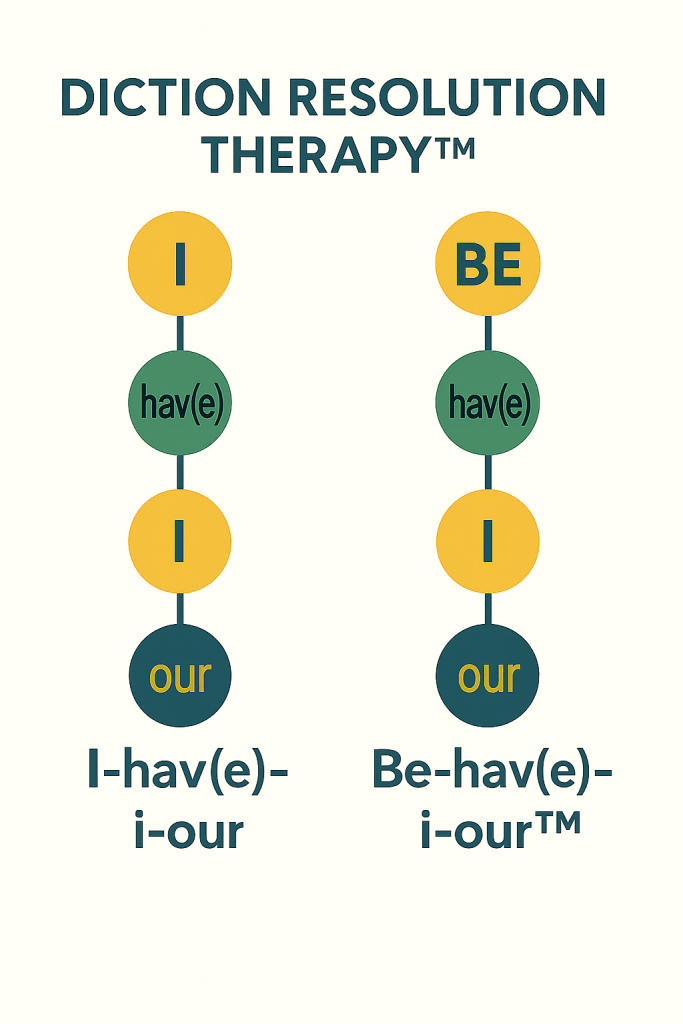
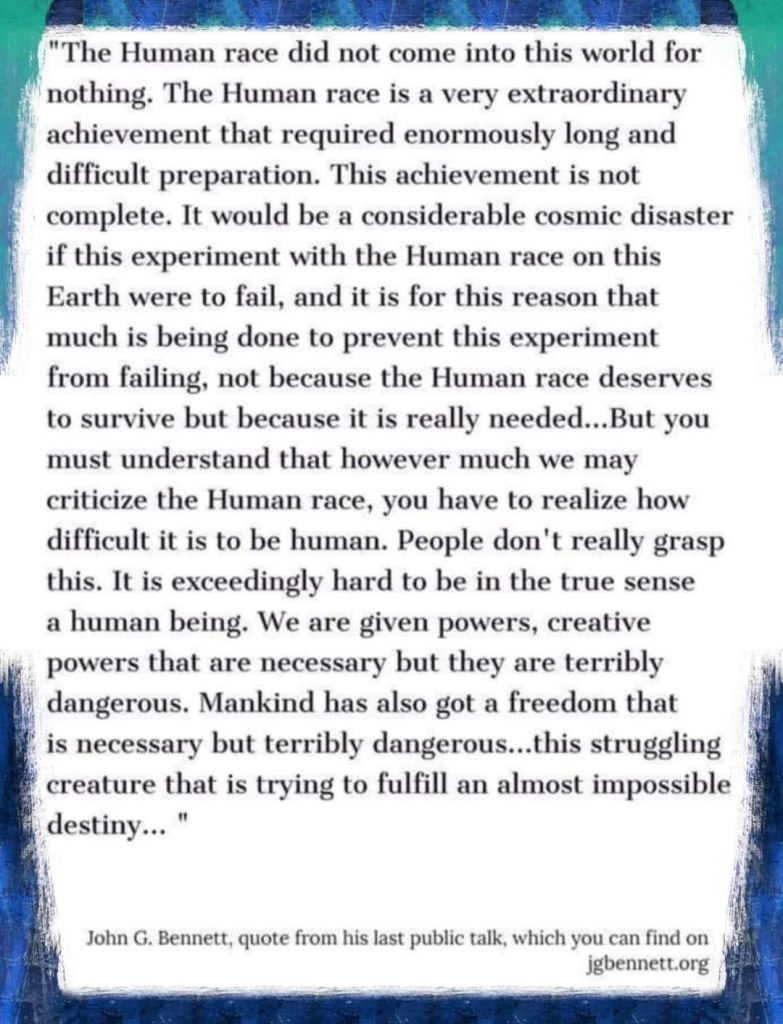

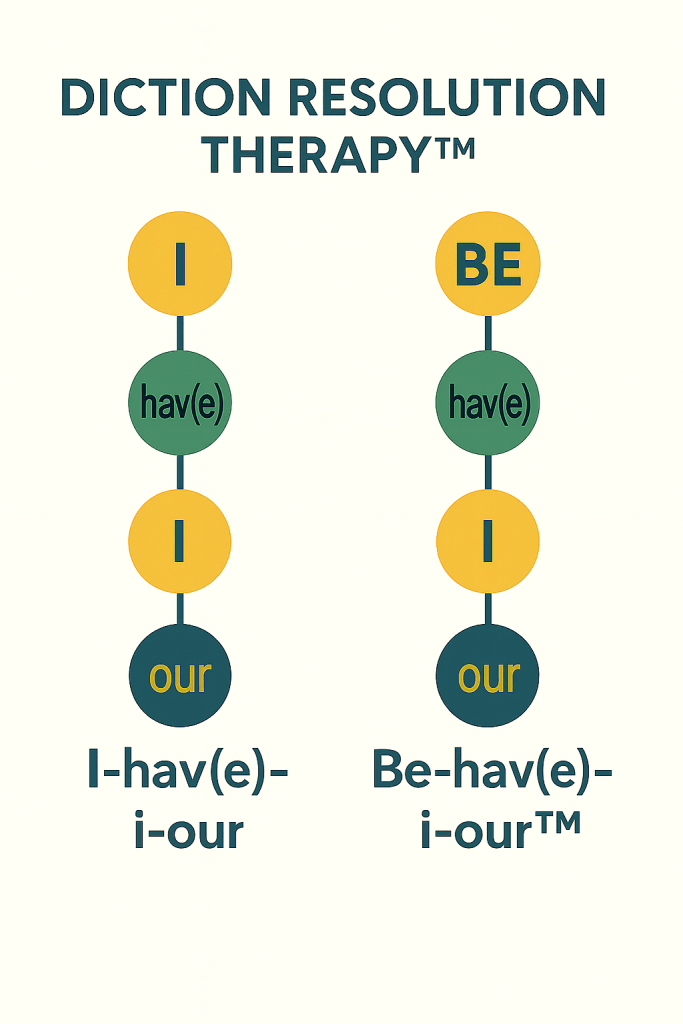

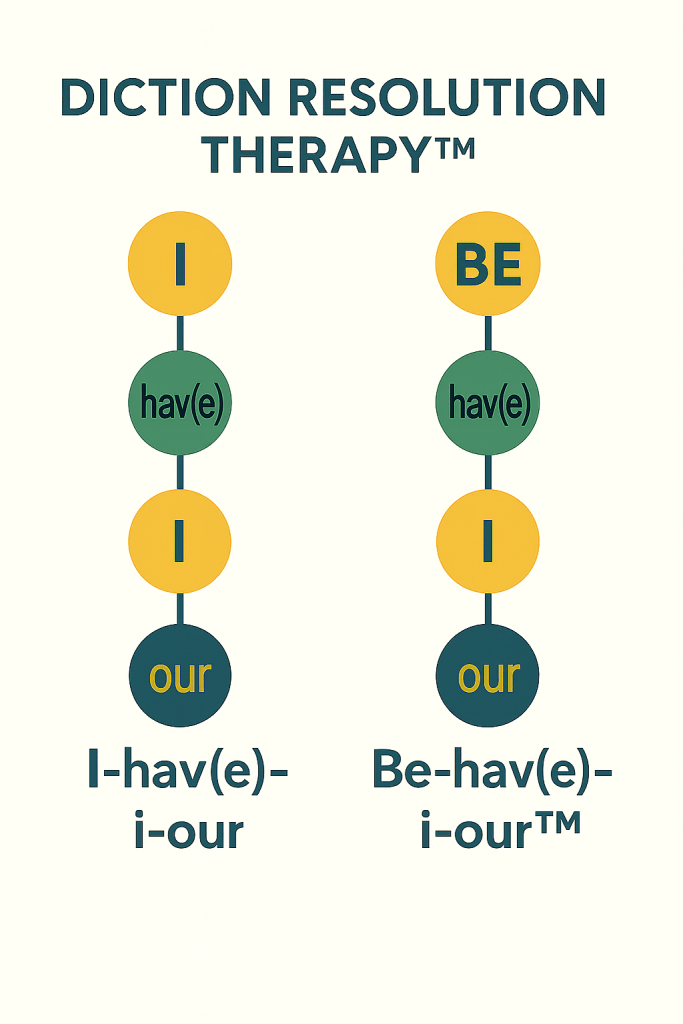
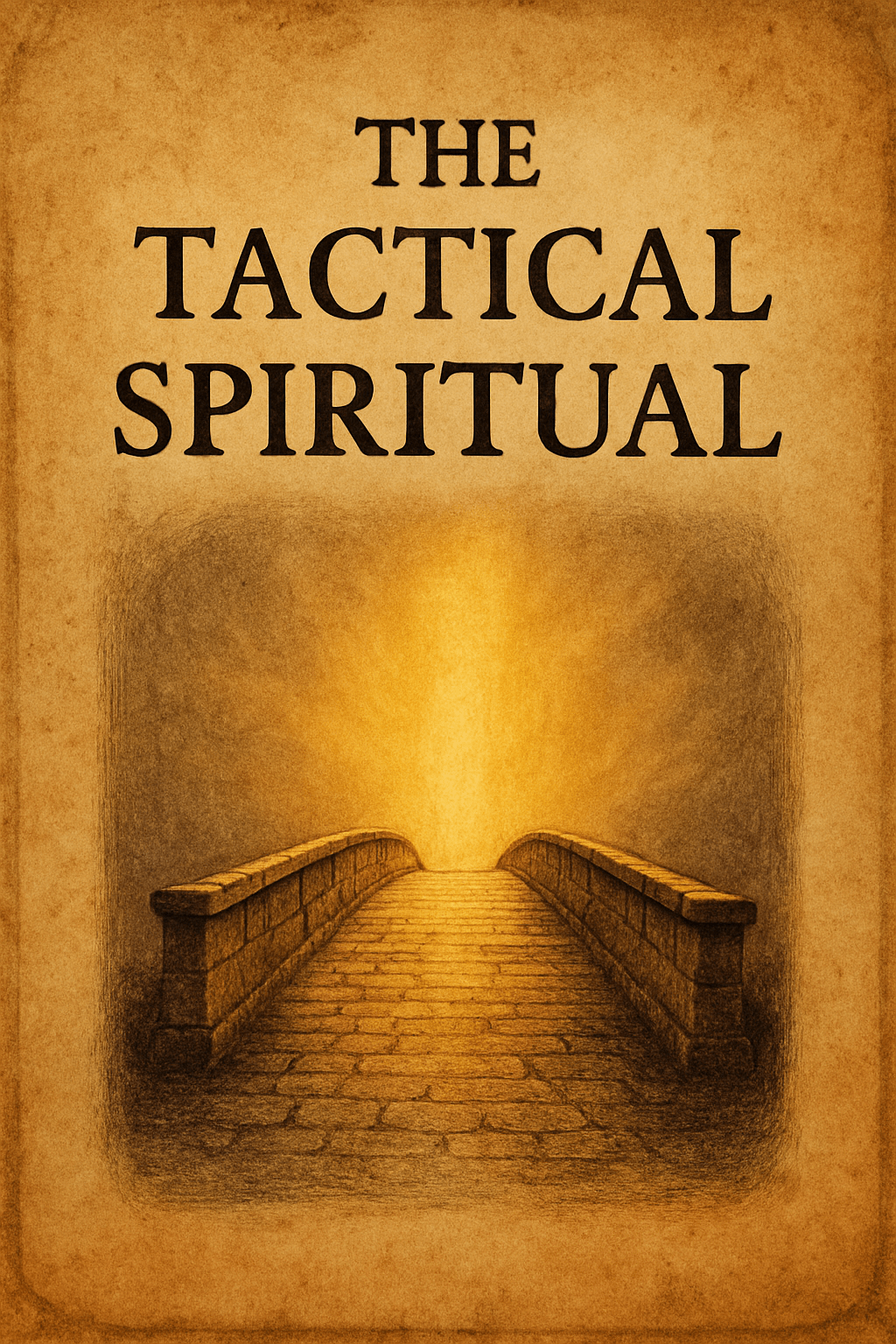
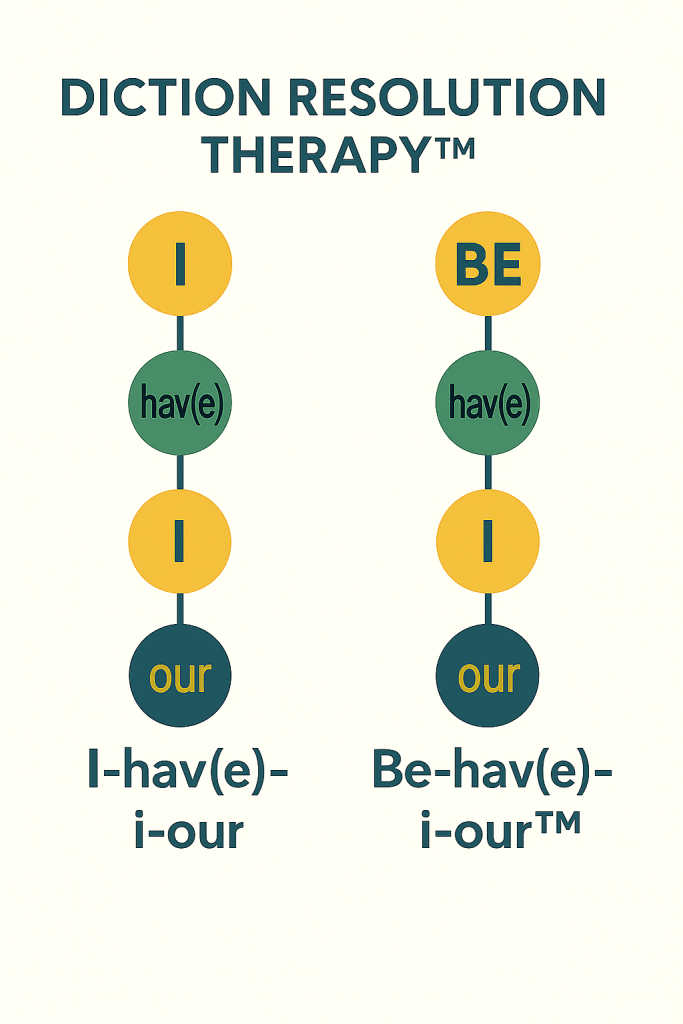
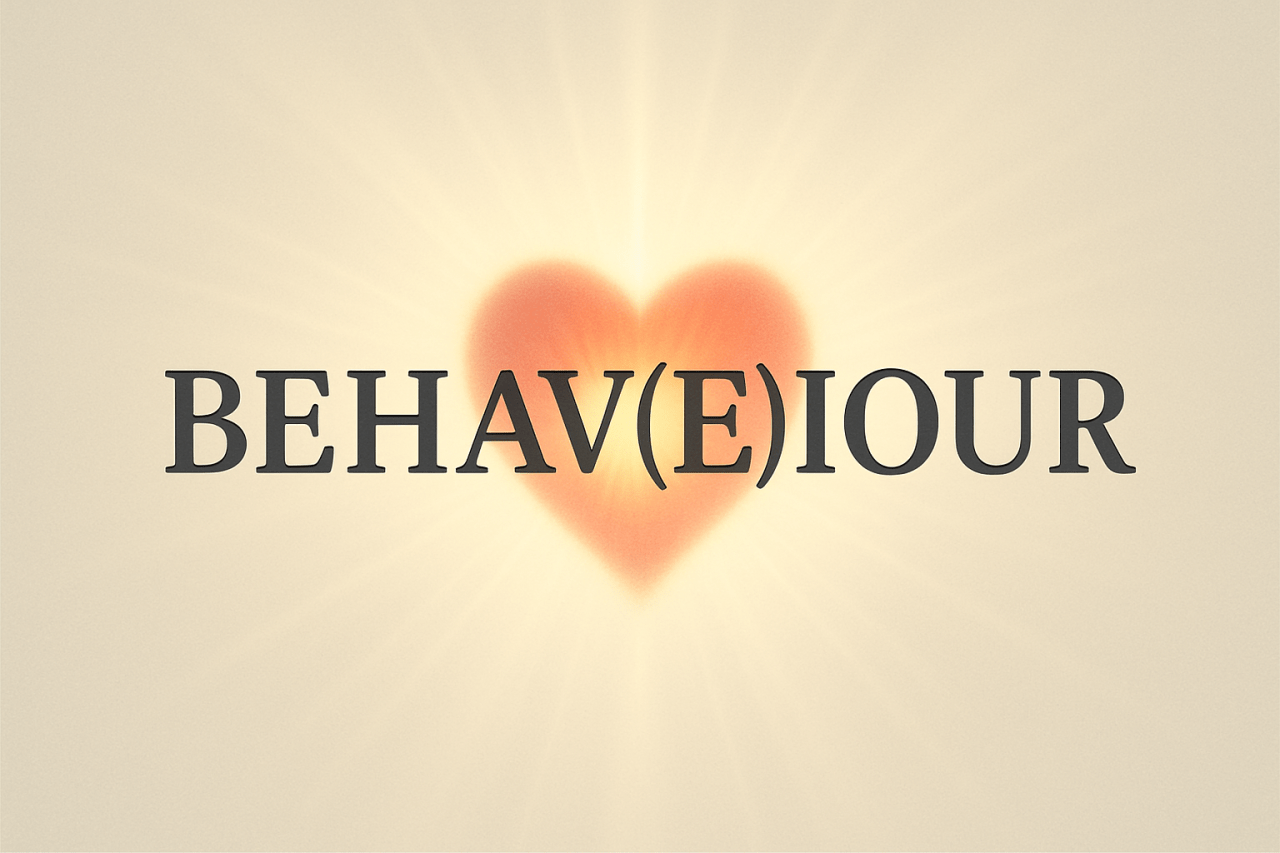
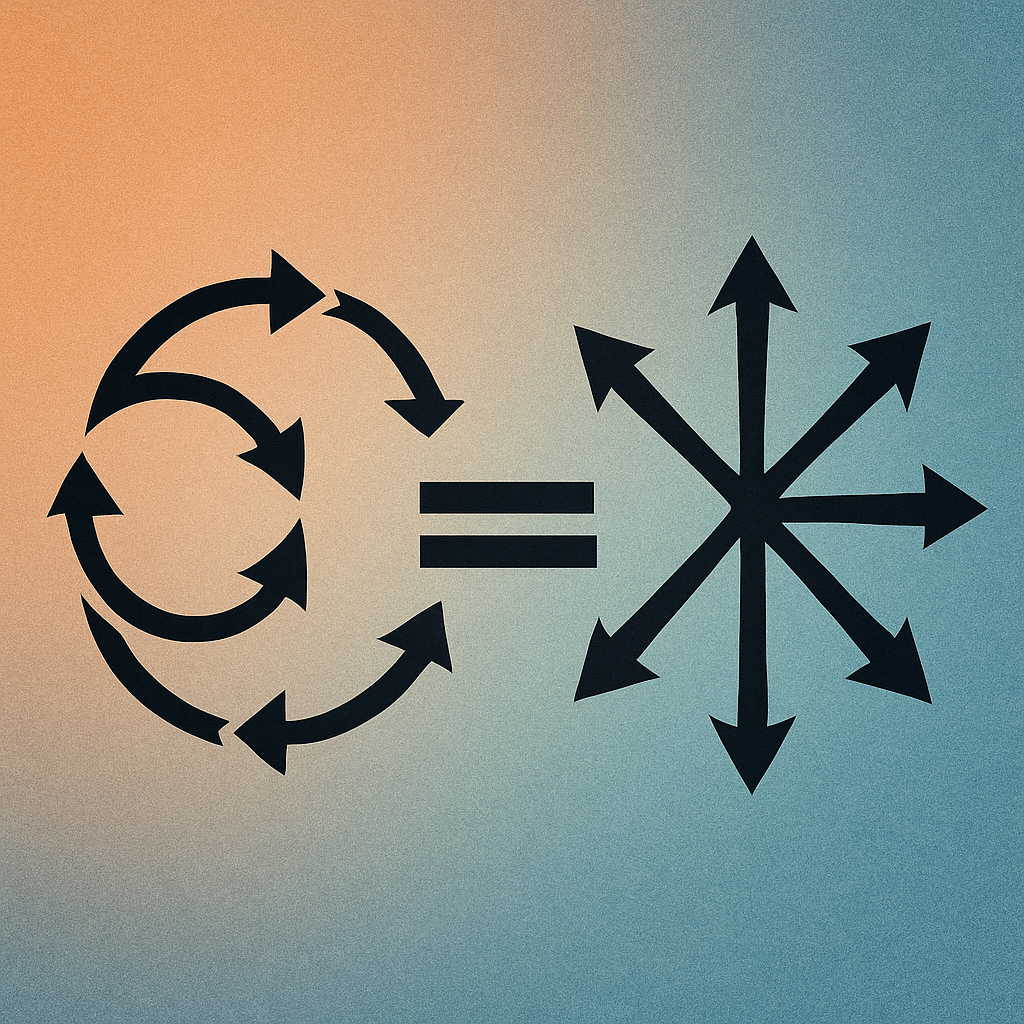
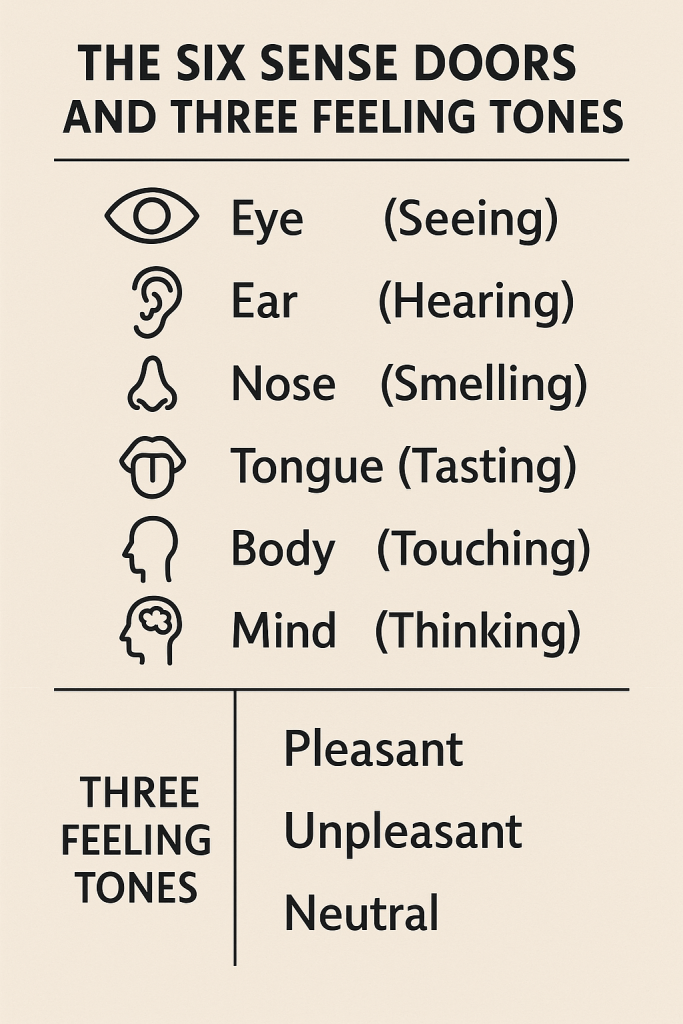
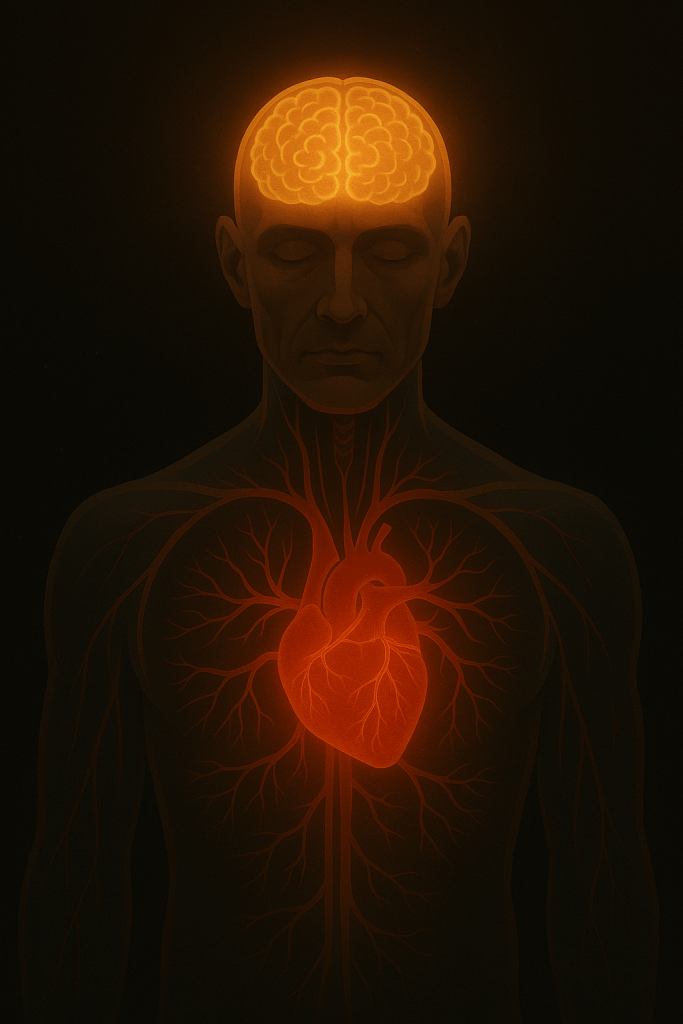
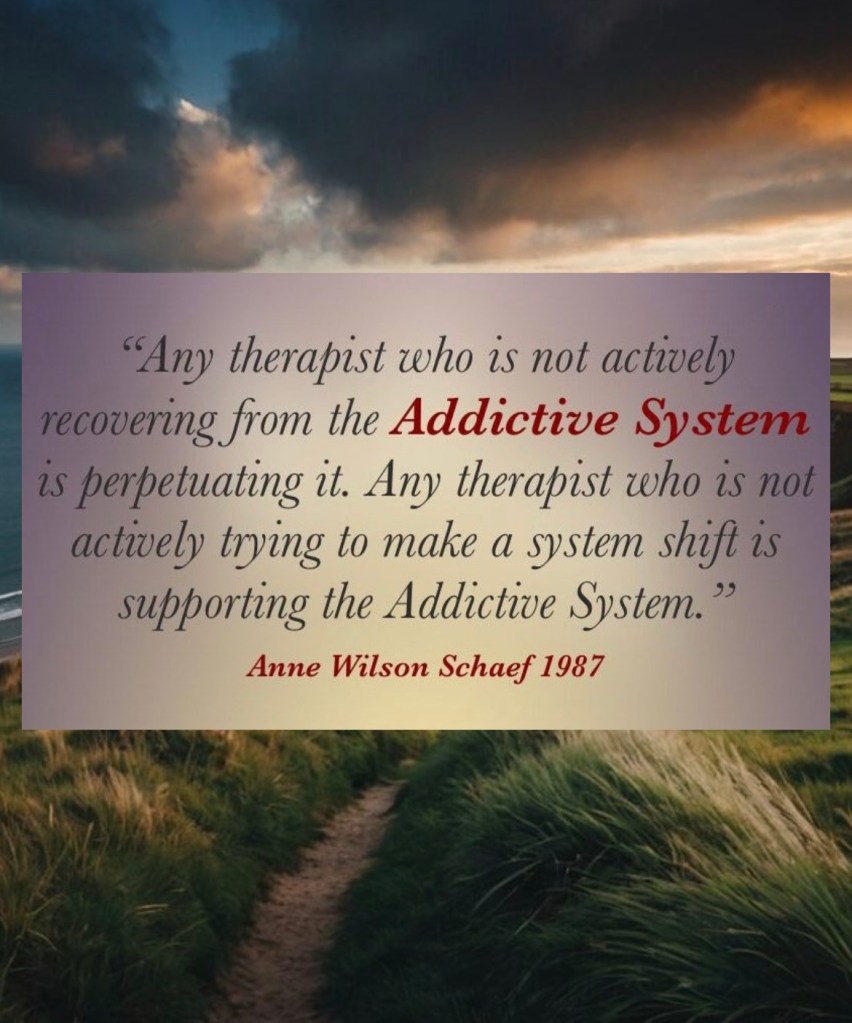


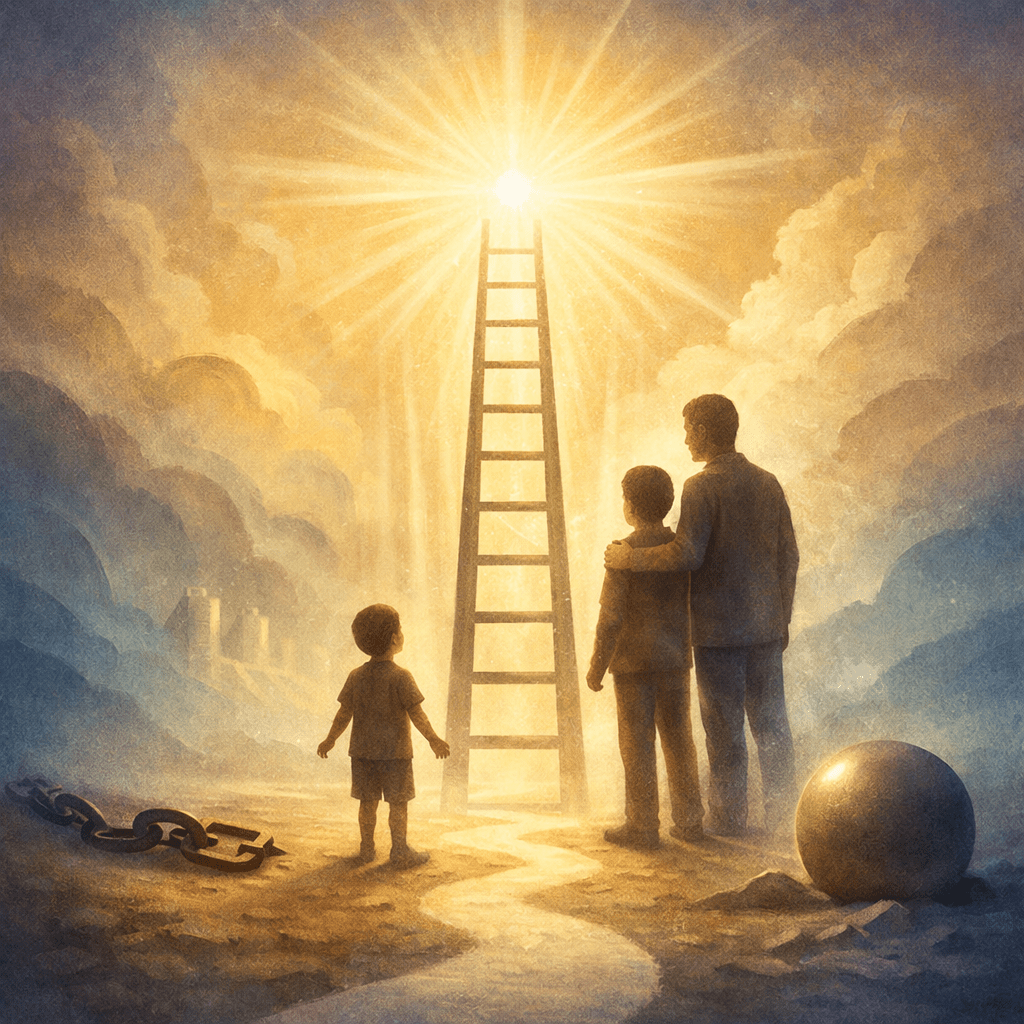
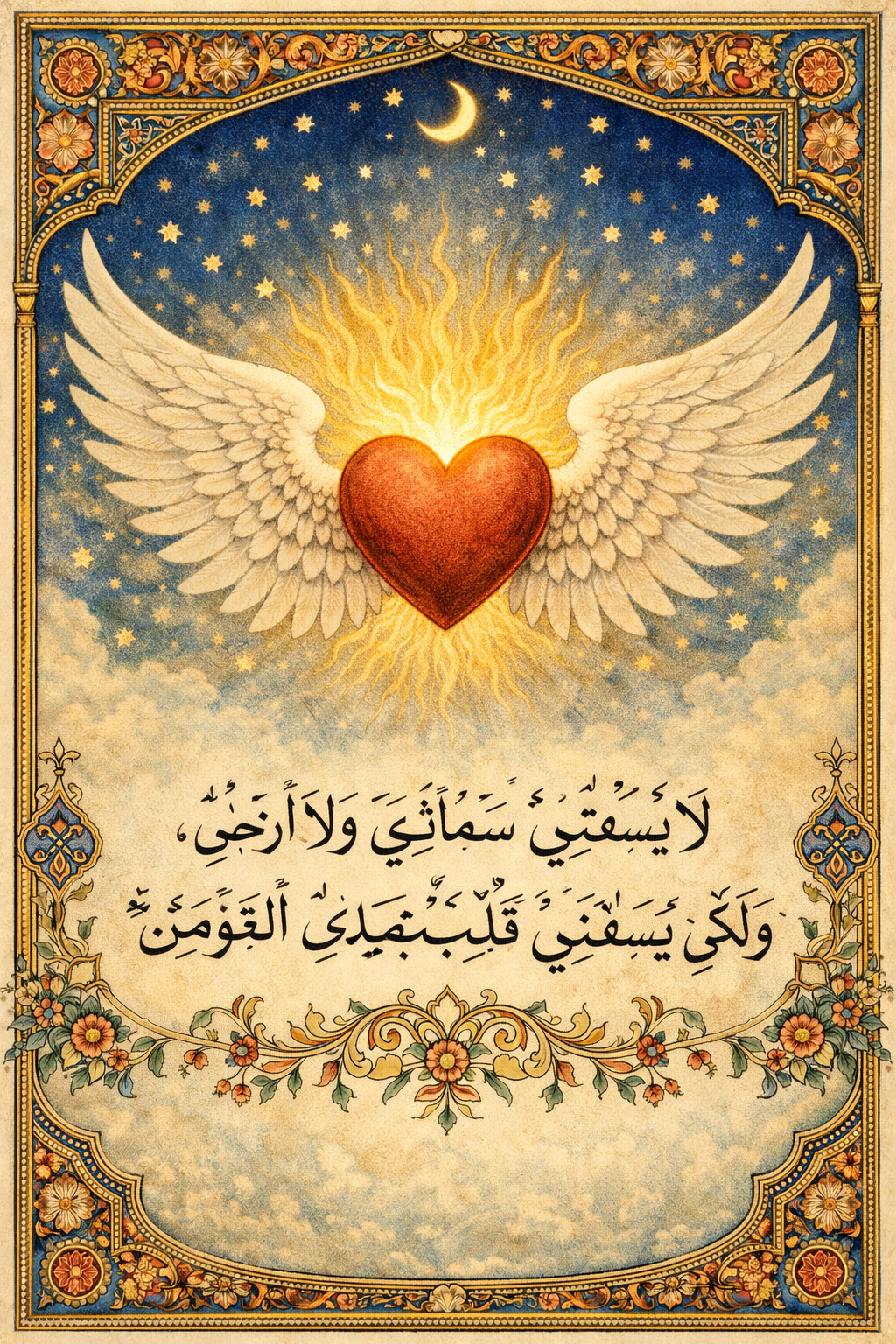
 the HU man healing